
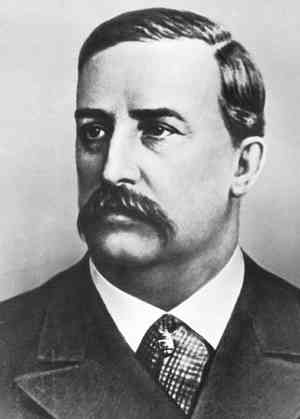
Alexander Borodin
Source: Le Blog de JazzNicknames
Born in Saint Petersburg on 12 Nov 1833, Alexander Porfiryevich Borodin was the illegitimate son of a Georgian nobleman, Luka Gedevanishvili. He was registered as the son of a serf, Porfiry Borodin, but not neglected. He entered the Medical–Surgical Academy in Saint Petersburg to study chemistry in 1850. Upon graduation in 1855 he served for a year as a surgeon at a military hospital, then undertook three years of advanced study in western Europe. He assumed the chair in chemistry at the Imperial Medical-Surgical Academy in 1862, the same year he studied with Mily Balakirev and began composing, to become one Balakirev's Mighty Handful (The Five), a group of musicians who set themselves the challenge of composing in manner peculiar to Russia, distinct from western Europe. The remarkable thing about Borodin was that he was a serious chemical scientist highly accomplished in that field whilst at once producing an oeuvre in music that alone would have been a life well spent. He himself describing his music as "relaxation from more serious occupations," Borodin went unknown in Europe and left behind a number of unfinished works to be completed by either Alexander Glazunov or Rimsky-Korsakov, both with whom he collaborated. In addition to operatic (4) and symphonic works (4), Borodin applied himself to pieces for chamber (13), piano (12) and voice (18).
Directories begin Borodin's oeuvre as of 1843 at age nine with 'Hélène-Polka', a piano piece revised in 1861 for four hands. A concerto and string trio, both lost, arrived in 1847. Of piano pieces written in 1849, two are lost though 'Adagio patetico' in A-flat major for four hands survives. In performances below, 'Adagio patetico' for four hands is arranged for two, followed by an early song of 1855, 'The beautiful girl does not love me'. Gamma1734 then combines two recordings of Borodin's 1861 'Hélène-Polka' to come up with four hands.
'Adagio patetico' A-flat major Piano piece by Alexander Borodin
1849 Originally composed for piano 4 hands Above arranged for 2
Piano: Marco Repetti 2008
'The beautiful girl does not love me' Song by Alexander Borodin
'Razlyubila krasna devitsa' 'Разлюбила красна девица'
1855 Composed for voice piano and cello Lyrics: A. Vinogradov
Bass: Alexander Vedernikov Piano: Igor Guselnikov Cello: Viktor Simon 1977
'Hélène-Polka' D minor Piano piece by Alexander Borodin
Composed for 2 hands 1843 (age 9) Revised for 4 hands 1861
Piano: Gamma1734
Borodin began his first of four operatic works, 'The Tsar's Bride', in 1867. His sketches were left incomplete in 1868 and later lost. This isn't to be confused with Rimsky-Korsakov's much later 'The Tsar's Bride' of 1898. Borodin's next work for stage was Act 4 of 'Młada', a collaboration of 1872 with César Cui writing Act 1, Modest Mussorgsky and Rimsky-Korsakov authoring Acts 2 and 3, with Ludwig Minkus the meanwhile to contribute ballet music. As this collaboration never arrived to a finished work, Borodin used some of its material in his later 'Igor'. Nor has this to do with Rimsky-Korsakov's later 'Mlada' of 1892.
The only opera that Borodin completed was the one-act satire, 'Bogatyri' ('The Heroic Warriors'). Borodin wasn't the only to recognize that opera was a bit off the charts with passionate extremes, such as characters tragically throwing themselves off cliffs in despair if not dying of too great woe in the arms of their tortured beloveds. Using the music of several composers (Rossini, Meyerbeer, Offenbach, Serov, Verdi, et al) orchestrated by E. Merten in 1867 [IMSLP], multiple sources have it first performed at the Bolshoi Theatre in Moscow on 6 November 1867 with libretto by Viktor Krylov, again in 1878. Neither IMSLP nor Wikipedia include the earlier 1867 date, as like only Merten's arrangement had been played, Krylov's libretto not applied until 1878. Whichever the case, both versions are said to have been banned by Russian authorities disliking fun being made of its medieval knights. For this was a mock opera during which Borodin contrasted its music with farcical false heroes. Borodin's final endeavor at opera would be 'Prince Igor' which he left incomplete upon his death in early 1887. It was finished by Rimsky-Korsakov and Glazunov toward its premiere in Saint Petersburg in 1890.
Better known for his symphonic than his stage works, Borodin had begun composing 'Symphony No.1' in E-flat major in 1862, though it wasn't performed until 23 December 1868 or 4 January 1869 at a concert of Imperial Russian Music conducted by his mentor, Balakirev. One notes with Borodin the extensive periods of time between beginning and completing some works, this explained in that he composed only part time as he pursued his main career in medicine which would include founding a medical school for women in 1872.
'Symphony No.1' D minor Alexander Borodin
Composed 1862-67 Published for piano 4 hands 1875 Full score 1882
USSR State TV & Radio Symphony Orchestra Gennady Rozhdestvensky
Mona DeQuis Fugue for Thought IMSLP Georg Predota
Borodin began his 'Symphony No.2' in 1869 toward its eventual premiere on 10 March of 1877. He finished his 'String Quartet No.1' in A major in 1879 toward publishing in 1884 in dedication to Rimsky-Korsakov's wife.
'Symphony No.2' D minor Alexander Borodin
Composed 1869-76 Published for piano 4 hands 1878 Full score 1887
Royal Concertgebouw Orchestra Karel Mark Chichon
Andrew Lindemann Malone IMSLP Wikipedia
'String Quartet No.1' A major Alexander Borodin
Composed 1874-79 Published 1884
Kacian Quartet
Edition Silvertrust IMSLP Score
Borodin's symphonic poem, 'In the Steppes of Central Asia', was dedicated to Franz Liszt whom he had met in the summer of 1875. That saw conducting by Rimsky-Korsakov in St. Petersburg on 20 April 1880. He both composed and published his 'String Quartet No.2' in D major 1881.
'In the Steppes of Central Asia' A major Symphonic poem by Alexander Borodin
Premiere 20 April 1880 in St. Petersburg w Rimsky-Korsakov conducting the Russian Opera Orchestra
Published 1882 in Hamburg
Tokyo Philharmonic Orchestra Mikhail Pletnev 22 Oct 2017
'String Quartet No.2' A major Alexander Borodin
1881 Published 1888
Borodin String Quartet 1980
David Fanning Andrew Lindemann Malone IMSLP Wikipedia
Borodin's 'Petite Suite' saw print in 1885 dedicated to Countess Louise de Mercy-Argenteau of Belgium. By far Borodin's longest work for piano, this has seven movements unless Borodin's 'Scherzo' in A-flat major is used as an eighth to conclude the work, that also published in 1885. Glazunov orchestrated this suite in 1889 with said scherzo inserted within the Nocturne that is the seventh movement. [See also scherzo].
'Petite Suite' A major Alexander Borodin
Published 1885
Piano: Philip Edward Fisher
'Scherzo' A-flat major Alexander Borodin
Published 1885
Piano: Philip Edward Fisher
Borodin's last operatic work, 'Prince Igor', had been begun in 1869 yet left incomplete upon his death on 27 February 1887 in St. Petersburg. This opera is set in 1202 when Igor Svyatoslavich invaded the Polovtsians in the Don River region of southern Russia. Barodin adopted the text of 'The Tale of Igor's Campaign' which oral tradition probably began sometime in the 12th century toward written form sometime in the 13th. 'Prince Igor' was first performed posthumously on 4 November 1890 in St. Petersburg at the Mariinsky Theatre after editing and completion by Glazunov and Rimsky-Korsakov. Conducting was by Karl Kuchera. The most popular section of 'Prince Igor' is 'Polovtsian Dances' at the end of Act 2.
'Prince Igor' Opera by Alexander Borodin
Composed 1969-87 Unfinished at death on 27 Feb 1887
Libretto: Borodin from 'The Tale of Igor's Campaign' C 1200
Completed by Rimsky-Korsakov and Glazunov
Posthumous premiere 4 Nov 1890 in St. Petersburg
State Academic Bolshoi Theatre of Russia
Musical direction: Vassily Sinaisky Stage Direction: Yuri Lyubimov
100 опер Galaxy Notes Libretto IMSLP Wikipedia
'Polovtsian Dances' Finale to Act 2 of 'Prince Igor' Opera by Alexander Borodin
Unfinished at death on 27 Feb 1887
Completed by Rimsky-Korsakov and Glazunov
Libretto: Borodin from 'The Tale of Igor's Campaign' C 1300
Posthumous premiere 4 Nov 1890 in St. Petersburg
Chorus of Dutch National Opera Dmitri Tcherniakov
New York Metropolitan Opera 7 Feb 2017
Classic FM Jessica Schilling Score Wikipedia
Borodin had begun working on 'Symphony No. 3' in A minor in 1882. The work was left unfinished with only two movements which were completed by Glazunov toward publishing in 1888 or 1889.
'Symphony No.3' A minor Alexander Borodin
Movement 1: Moderato assai Movement 2: Scherzo
Unfinished at death
Completed by Glazunov toward publishing 1889
Young Artist Orchestra Dr. Gary Auguste Robinson
Gunter Theatre / Peace Center for the Performing Arts in Greenville SC 10 Oct 2013
'Symphony No.3' A minor Opera by Alexander Borodin
Movement 1: Moderato assai Movement 2: Scherzo
Unfinished at death
Completed by Glazunov toward publishing 1889
State Symphony Orchestra of Russia Evgeny Svetlanov
Sources & References for Alexander Borodin:
VF History (notes)
Audio of Borodin:
String Quartet No.1 (1879 / performed by various)
String Quartet No.2 (1881 / performed by various)
Authorship:
Simplified Azotometric Method (chemistry / 1886)
Springer Nature Link (list of works in chemistry)
Usage on Broadway: IBDB
Chronology: The Romantic Movement
Compositions by Genre:
IMSLP (English)
Klassika (German)
Operas (English)
Russisches Musikarchiv (German)
Villa Speranza (Italian)
Compositions Individual:
Bogatyri (opera w libretto by Viktor Krylov / 1867? / 1878):
bibliolore Krasnoyarsk State Opera and Ballet Theatre
Documents: Gallica
Usage in Film: IMDb
The Five (The Mighty Handful: Balakirev / Cui / Mussorgsky / Rimsky-Korsakov / Borodin / 1856-70):
Austin M. Doub (Cedarville University / 2019)
Ella Uren (Northern Michigan University / 2020)
Iconography: Wikimedia Commons Gravesite: Find a Grave Kendtes Gravsted
Lyrics / Texts: LiederNet
Recordings of Borodin: Catalogs: 45 Worlds All Music Arkiv Discogs Music Brainz
Recordings of Borodin: Select:
Symphonies Nos. 1, 2 and 3 (Slovak Radio Symphony Orchestra w Stephen Gunzenhauser conducting arrangements by Alexander Glazunov / Naxos 8.550238 / 1990):
Scores / Sheet Music:
Abe Books (vendor)
Musicalics (vendor)
Prince Igor (opera completed by Glazunov and Rimsky-Korsakov / posthumous premiere 1890) [scroll]
Further Reading:
Eva Amsen (A Composer Among Chemists / 2019)
The Bogatyri (medieval Slavic knights):
Historium Nicholas Kotar Onyx Path Forum Wikipedia
Borodin (State) Quartet (formed in the Soviet Union 1945):
Martin Buzacott (Classically Curious: Alexander Borodin / 2019)
Pierre Tijskens / Claudio Lanzieri (Le vite parallele di Aleksandr Porfir’evich Borodin)
Bibliography:
N.A. Figurovskii / Yu.I. Solov'ev (Aleksandr Porfir’evich Borodin: A Chemist’s Biography / Springer Science & Business Media / 2012)
Svetlana Martynovaev (Italians in a Russian Manner: One Step from Serious to Funny / Fontes Artis Musicae / Vol 56 No.1 / 2009)
Authority Search: BNF Data Deutsche Digitale Bibliothek VIAF
Other Profiles:
English:
Robert Martindale (Stanford University)
Rebecca Miller (My Hero)
George Predota (Interlude)
Yan Shenkman (Russia Beyond)
German (Wikipedia)
Italian (Giulio Cesare Paribeni / Enciclopedia Italiana / 1930)
Japanese (Wikipedia)
Norwegian (Store norske leksikon)
Russian:
Encyclopedic Dictionary of Brockhaus and Efron (1891)
A.A. Polovtsov (Russian Biographical Dictionary / 1908)
Riemann's Musical Dictionary (1901)
V.V. Stasov (1952)
Spanish (Wikipedia)
Classical Main Menu Modern Recording
|
|