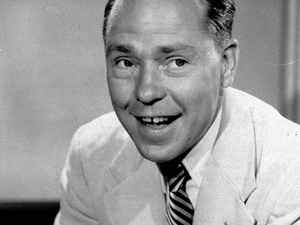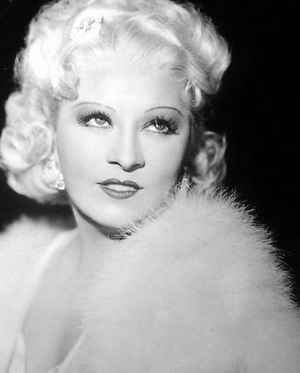
This page is antiquated and no longer exists.
Early Vocal Recording
Group & Last Name Index to Full History:
A B C D E F G H I J K L M N O P Q R S T U V W X Y Z
Tracks are listed in chronological order by year, then alphabetically.
Listings do not reflect proper order by month or day: later oft precedes earlier.
Find on Page = F3. Not on this page? See history tree below.
Featured on this page loosely in order of first recording if not record release (as possible).
Names are alphabetical, not chronological, per year:
| 1888 | Len Spencer |
| 1891 | |
| 1892 | John Bieling Richard Jose JW Myers |
| 1893 | Ada Jones |
| 1896 | SH Dudley |
| 1897 | Albert Campbell Arthur Collins Billy Murray Steve Porter |
| 1898 | Harry Macdonough |
| 1899 | Byron Harlan |
| 1902 | Henry Burr |
| 1906 | Elise Stevenson |
| 1907 | The Peerless Quartet Florenz Ziegfeld |
| 1908 | Will Oakland |
| 1910 | Sophie Tucker |
| 1911 | Charles Harrison Al Jolson |
| 1916 | Marion Harris |
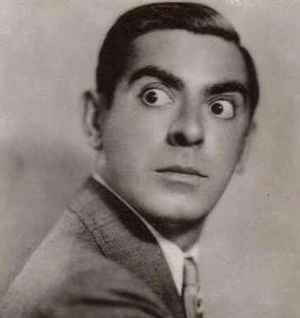
| 1917 | Eddie Cantor |
| 1918 | Gertrude Lawrence |
| 1920 | Aileen Stanley |
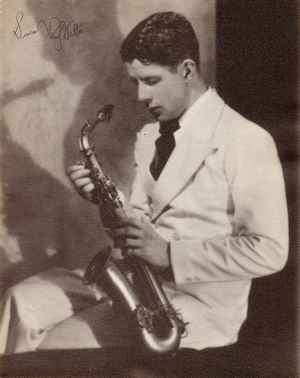
| 1921 | Rudy Vallée |
| 1922 | Brox Sisters Eva Taylor |
| 1923 | Ida Cox |
| 1924 | Gene Austin Virginia Liston Red McKenzie Emmett Miller Lee Morse |
| 1925 | Whispering Jack Smith |
| 1926 | Josephine Baker Lillie Delk Christian Bing Crosby Ruth Etting Annette Hanshaw |
| 1927 | Frank Luther Helen Morgan |
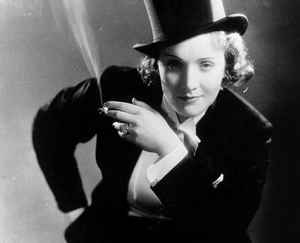
| 1928 | Russ Columbo Marlene Dietrich Gracie Fields Dick Robertson Elisabeth Welch |
| 1930 | Chick Bullock |
| 1932 | Johnny Mercer Three X Sisters |
| 1933 | Mae West |
1922 Toot Toot Tootsie Goodbye
|
Caveats in the employment of this page: 1. It descends in chronological
order by the year the artist or band is first found on a commercial record
issue (ideally) by year only, alphabetical thereat. One musician above
another doesn't necessarily translate to earlier issue unless the year
changed. 2. Though release dates are the aim with links to YouTube, some
are recording dates and may not be everywhere clearly distinguished. 3.
Reissues are used to represent originals without much discussion. |
||
| This page concerns largely ragtime and early
jazz vocalists. It commences with early recording artists preceding
ragtime and moves onward toward later emphasis on song in Hollywood. Some
on this page might more appropriately fit in
Popular Music, placed here more for their contributions to early vocal
recording than for the former. Singers who were also bandleaders
are in Early Jazz 1. Vocalists
whose expertise was a particular instrument such as piano are in
Early Jazz 2. See also Twenties Jazz. As mentioned, ragtime
begins to show up on this
page w other material representative of early phonograph
recordings – such as ballads, comedy and minstrels –
by early recording vocalists not especially associated with ragtime (no Caruso, though a few on this page
did study opera). The very
first
song recorded, incidentally, was also the
first
recorded sound, made on April 9, 1860, by Édouard-Léon Scott de Martinville,
who invented the phonoautograph some 17 years before Thomas Edison [1,
2,
3,
4,
5]
invented the phonograph in 1878. The recording is a verse from 'Au Clair
de la Lune', sung by a woman. Not a few of the early recordings on this
page sound nigh as bad, as a little of the prehistory of ragtime is traced
much in part to the Irish ballad. Nice accounts of ragtime at
1,
2,
3.
Important musical venues preceding jazz and concurrent with ragtime were
minstrelsy [1,
2,
3,
4,
5] and the
vaudeville variety show [1,
2,
3,
4],
though of small influence in the development of jazz, minstrelsy in
particular disappearing w black musicians at the avant-garde of jazz, who
were once an object of humor for the purpose of entertainment become the
big dog on the block.
Jazz sessions on this page are generally
Lord's Disco for
jazz only, otherwise largely DAHR [1,
2].
Links to Red Hot Jazz (RHJ
1,
2,
3)
also point to sessions. A good source for lyrics for this period is
Lyrics Playground.
|
||
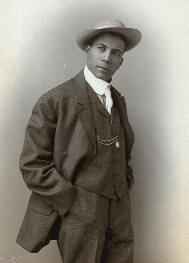
| Born in 1867 in Washington D.C.,
Len Spencer was a baritone vocalist
who fits well in the annals of popular music,
here inserted as a sample both of early vocal recording, largely
advertisements in Spencer's case, and ragtime. All of Spencer's Planck
lengths and Planck instants had arrived to an arrangement coinciding
with those of early cylinder recording [1,
2,
3,
4,
5,
6] such that he would become known as
the granddaddy of phonograph recording as the first popular cylinder
recording artist, he also to specialize in comedy and the "coon" (black
folk) songs
[1,
2,
3,
4] of minstrelsy
[1,
2,
3,
4,
5] having their heyday
between 1880 and 1920, that is, until black musicians began showing the
way to rhythm. Also work the vaudeville variety show
[1,
2,
3,
4] circuit,
Spencer had begun teaching at his father's business college in D.C. at age
eighteen, which he did three years until hiring on with the Columbia
Phonograph Company [*] as a vocalist circa '88. Historical Voices has him
recording 'I Am the Edison Phonograph' auf Deutschsprachige for Edison Phonograph
[*]
in '88 as well. Spencer signed up w the U.S. Phonograph Company (producing
for Edison) about 1890 though his first issue, 'Liza Loves You', was in
1891 on Columbia. 'Ta Ra Ra Boom Der E' saw issue in 1892
on Columbia. Other early cylinder issues included 'The Old Folks at Home' (New
Jersey '92), 'Near It' (New Jersey '93), 'Mamie, Come and Kiss Your Honey
Boy' (New Jersey '93), 'Dat New Bully' (Columbia 2107 '95) and
'Little Alabama Coon' (Columbia 7156). New Jersey Phonograph was an arm of the
North American Phonograph Company
[1,
2].
Another major recording company, Victor, didn't enter the cylinder
industry until 1901. Spencer at the fore of cylinder recording also made
him among the first to record on flat disc. DAHR begins its
sessionography
of Spencer on disc per 'Nearer, my God, to Thee' on Berliner 915 in 1986.
The Berliner label [1,
2,
3,
4] was the first to distribute disc recordings, founded by
Emile Berliner who had also invented disc recording and the gramophone in
Washington D.C. in
1887 [1,
2,
3],
the first getting pressed in 1894. 1897 saw Spencer's
arrest for stealing cylinder recordings from U.S. Phonograph
presumably for purchase by Columbia. Other early issues by Spencer in the
last decade of the 19th century at 1,
2.
Albeit record charts were variously devised soon upon the advent of
recording [see
Sousa
by the Marine Band 1890]
MusicVF commences it's list of Spencer at #1 in 1900 per 'Ma Tiger Lily'
(Columbia 7502).
[See also charts 1900
and charts first decade of the 20th century
at TSORT.] Spencer's title, 'The Arkansas Traveler' (Columbia 11098), is
listed at #2 in November of 1900. The 1902 version of that on Edison Gold
Moulded 8202 reached #1. The first decade of the 20th century witnessed Spencer recording with Ada
Jones on titles like 'Peaches and Cream' (Lowitz '06), 'Henny and
Hilda at the German Picnic' (Edison Amberol 23 '08), 'Sweet Peggy Magee'
(Edison Amberol 148 '09) and 'The Golden Wedding' (Edison Amberol 312
'09). Spencer ran a booking agency called Len Spencer's Lyceum in New York
City before his death there on December 15, 1916. Several of the entries below
are representative of early
phonograph recording rather than ragtime. References:
Wikipedia,
DAHR,
45Worlds,
Discogs,
RYM.
Archives: 'The Phonoscope' 1896,
Internet Archive,
LOC,
Phonozoic. Further reading: 'Popular American Recording Pioneers
1895-1925' by Tim Gracyk, Frank Hoffmann and B. Lee Cooper, Psychology
Press, 2000. Len Spencer 1888 Deutschsprachige Date unconfirmed Len Spencer 1899 Composition: Ida Emerson/Joseph Howard Music: John Stromberg Lyrics: Edgar Smith Len Spencer 1902 Recital Composition: King David Circa 1000 BC Recital Composition: Sermon by Jesus Circa 28 CE Composition: See TTA Len Spencer 1903 Len Spencer 1906 With Ada Jones With Alf Holt Composition: Len Spencer With Ada Jones Composition: Len Spencer Len Spencer 1907 Bronco Bob and His Little Cheyenne With Ada Jones Composition: Len Spencer Len Spencer 1908 With Ada Jones Len Spencer 1909 With Ada Jones Len Spencer 1910 Return of the Arkansas Traveler With Ada Jones Dialogue: Len Spencer Len Spencer 1914 With Ada Jones
|
Len Spencer Source: Pop Music History |
|
| Thought to have been born in Boston in 1860,
tenor William F Denny's
first recordings for the
New England Phonograph Company went down in 1890, issued in 1891
[LOC, Wikipedia]. Denny
had gotten his start in music doing vaudeville [1,
2,
3,
4].
Denny at the fore of cylinder recording also made him among the first to
record on flat disc. DAHR begins its
sessionography
of Denny on disc per 'Czar of the Tenderloin' on Berliner 1748 in 1987.
The Berliner label [1,
2,
3,
4] was the first to distribute disc recordings, founded by
Emile Berliner who had also invented disc recording and the gramophone in
Washington D.C. in
1887 [1,
2,
3],
the first getting pressed
in 1894. Denny's last recording is thought to have been 'You'll
Have to Get Off and Walk' issued in July 1907. He was still traveling
the vaudeville circuit when he died in Seattle on October 2, 1908, of atherosclerosis.
Further references: 'Popular American Recording Pioneers 1895-1925' by Tim Gracyk,
Frank Hoffmann and B. Lee Cooper, Psychology Press, 2000; Catalogues:
1,
2,
3.
Per 'Meet Me in St. Louis' in 1904 below, that had been written for the
Louisiana Purchase Exposition at the St. Louis World's Fair of 1904
celebrating the Louisiana Purchase
from Napoleon in 1803. Will F Denny 1897 Will F Denny 1899 How'd You Like to Be the Iceman? Will F Denny 1903 Composition: Thomas Allen I'm the Man Who Makes the Money in the Mint Music: Gus Edwards Lyrics: Will Cobb Will F Denny 1904 Music: Kerry Mills Lyrics: Andrew Sterling Wil F Denny 1906 Composition: Collin Davis Will F Denny 1907 You'll Have to Get Off and Walk Composition: David Reed
|
William F Denny |
|
|
George Gaskin Source: Discogs |
Born in 1863 in Belfast,
Ireland, tenor
vocalist,
George Gaskin, was brought to the
United States as a youth. He
is known to have recorded as early as 1891 for the
North American Phonograph Company
[1,
2]. Those were on June 2
one day after
George Johnson's first
recording for the same (Johnson
listed below per alphabetical order for 1891). Thomas Edison
[1,
2,
3,
4,
5] would
purchase North American in 1896, changing its name to National
[1,
2]. UCSB has
Gaskin on 'After the Ball' circa 1893 for the U.S. Phonograph
Company (producing for Edison). He's mentioned signing up with the Columbia
Phonograph Company [*] in
a catalog of 1894.
See also Columbia 1896-1900 at Internet Archive commencing w 'Sweet Marie'
(4001). Gaskin at the fore of cylinder recording also made him among the
first to record on flat disc. DAHR begins its
sessionography
of Gaskin on disc per 'Henrietta, Have You Met Her?' on Berliner 151 in
1894. The Berliner label [1,
2,
3,
4]
was the first to distribute disc recordings, founded by
Emile Berliner who had also invented disc recording and the gramophone in
Washington D.C. in
1887 [1,
2,
3],
the first getting pressed
in 1894. Albeit various charts began to be made upon the advent of the
commercial dissemination of phonograph recordings Music VF begins its list
of best-selling titles in 1900 w 'When Cloe Sings a Song' (Columbia 4248)
and 'When You Were Sweet Sixteen' (Columbia 4281), both topping the charts
at #1. Wikipedia has Gaskin retiring in 1904 despite his highly popular
release early that year of 'Bedelia', charting at #3. He died on 14
December 1920 in New York.
References: Mainspring; 'Popular American Recording Pioneers 1895-1925' by Tim Gracyk,
Frank Hoffmann and B. Lee Cooper, Psychology Press, 2000; Tinfoil;
Wikipedia.
Catalogues: 1,
2,
3.
George Gaskin 1891 Composition: Thomas Casey George Gaskin 1893 Composition: Charles Harris George Gaskin 1895 I Don't Want to Play In Your Yard Composition: Henry Petrie Composition: Stephen Foster Music: Charles Lawlor Lyrics: James Blake George Gaskin 1896 Composition: James Thornton 1894 George Gaskin 1898 Composition: Paul Dresser 1897 Composition: Stanley Carter George Gaskin 1899 America (My Country 'Tis of Thee) Composition: See LOC George Gaskin 1903 Composition: Harrison Millard
|
|
|
|
Born in 1846 in Virginia,
George W. Johnson
was a minstrel and vaudeville
singer believed to be the first black to record. Johnson was performing in
Manhattan when he was offered twenty cents per two minutes of recording by
Charles Marshall of the New York Phonograph Company and Victor Emerson of
the New Jersey
Phonograph Company. Among the first of those recordings was 'The Whistling
Coon' followed by 'The Laughing Song', both of which became best-sellers.
Gaskin at the fore of cylinder recording also made him among the first to
record on flat disc. DAHR begins its
sessionography
of Johnson on disc per 'Whistling Coon' on Berliner 196 in 1894. The
Berliner label [1,
2,
3,
4]
was the first to distribute disc recordings, founded by
Emile Berliner who had also invented disc recording and the gramophone in
Washington D.C. in
1887 [1,
2,
3],
the first getting pressed
in 1894. Johnson's popularity began to wane upon the turn of the century.
He ceased recording and took employment as an office doorman. He was 67
years old upon his death on 13 January 1914 with small clue to what his
little seeds would lead. The 1891 recordings below were for the New Jersey
Phonograph Company. He began recording for
North American Phonograph Company
[1,
2] later the same year.
References: 1,
2,
3,
4,
5,
'Lost Sounds: Blacks and the Birth of the Recording Industry 1890-1919' by
Tim Brooks, University of Illinois Press, 2004
Catalogs: 1,
2,
3,
4.
Internet Archives. George Johnson 1891 Composition: Sam Devere George Johnson 1898
|
George Johnson Source: Library of Congress
|
| Born in 1869 in New York City, tenor
John Bieling [1,
2] sang with various vocal
groups while working in a stained glass factory. Bieling first recorded in 1892 with the
Manhansett Quartet, other members
of which were George Gaskin,
Joe Riley and Walter Snow. In 1898 he formed the Edison Male Quartet to record
for Thomas Edison's [1,
2,
3,
4,
5] phonograph company. That group would be renamed the
Haydn Quartet in order to record for other companies as well
('Sweet Adeline You're the Flower of My Heart'/ Monarch 2923/ '04). Bieling began singing
with Billy Murray's
American Quartet in 1909. He began featuring in the Heidelberg Quintet in 1911. In
1913 he gave up singing due to damaged (overworked) vocal chords, his last
recording thought to have been w the American Quartet in 1913: 'Float Down
the River' (Victor 17438). Replaced by Robert Armour, Bieling then began
to work in sales for Victor Records [1,
2,
3]. Bieling later sold Victrola phonographs.
Retiring from that in 1926, he died in Hempstead, Long Island, in 30 March 1948.
DAHR.
Discogs. Because Bieling rarely recorded solo the index below is more a list of early vocal
recording groups and major vocalists whom he accompanied than of Bieling.
At least one recording below may be beyond repair. John Bieling 1892 With the Manhansett Quartet Composition: Frank Bridge John Bieling 1895 With the Manhansett Quartet Composition: Lady John Scott John Bieling 1902 With Steve Porter Music: Henry Tucker Lyrics: George Cooper John Bieling 1903 I'll Wed You in the Golden Summer Time With Harry Macdonough Music: Stanley Crawford Lyrics: Alfred Bryan I'm Wearing My Heart Away for You With Harry Macdonough Composition: Charles Harris Somebody's Waiting 'Neath Southern Skies With Harry Macdonough Music: John W. Bratton Lyrics: Arthur J. Lamb John Bieling 1904 The Little Rustic Cottage by the Stream With Harry Macdonough Music: John Heinzman/Otto Heinzman Lyrics: Monroe H. Rosenfeld John Bieling 1906 With Harry Macdonough Composition: George C. Stebbins John Bieling 1908 With the Haydn Quartet Music: Joseph Philbrick Webster Lyrics: Sanford Fillmore Bennett John Bieling 1911 That Fellow With the Cello Rag With the American Quartet Composition: Victor H. Smalley John Bieling 1912 With the American Quartet Music: Albert Von Tilzer Lyrics: Harry Porter I Want to Love You While the Music's Playing With the Heidelberg Quintet Music: George Botsford Lyrics: Jean C. Havez John Bieling 1913 With the American Quartet Composition: Paul Dresser With the Haydn Quartet Music: Theodore F. Morse Lyrics: Richard Henry Buck With Billy Murray Composition: Nat Mann/Steve Porter
|
John Bieling Source: Library of Congress |
|
| Born in Cornwall, England, in 1862,
Richard Jose [1,
2,
3]
was more a minstrel [1,
2,
3,
4,
5] than ragtime
[1,
2,
3]
singer. He immigrated to Nevada as a teenager upon the death of his
father, a copper miner, in 1876. Not finding the uncle he was in search
of, he began singing professionally in 1881 with Thatcher's Minstrels
[Wikipedia]. He first recorded in 1892, a cylinder [1,
2,
3,
4,
5,
6] for the
New England Phonograph
Company called 'The Blind Boy', then largely disappears from record until
composing the music for baritone vocalist,
J. W. Myers', release of 'I
Went to See Them March Away' in 1902. Jose began recording on flat disc w the
Victor Talking Machine Company [1,
2]
in 1903: 'Silver Threads Among the Gold'
(Victor 2556) [DAHR].
Music VF has that topping the charts in February of 1904.
'The Day That You Grew Colder' (Victor 31348) found #3 in 1905, followed
by 'When I'm Away from You, Dear' (Victor 4259) at #4 the same year.
Jose's last releases for Victor were in 1906, including his highly popular
'When You and I Were Young, Maggie' (Victor 31485), 'Home Sweet Home'
(Victor 31515) and 'Nearer My God to Thee' (Victor 4818). In 1915 Jose appeared in
the silent film, 'Silver Threads Among the Gold', which songs he lip synced
from the wings of Madison Square Gardens, marking the Gardens' first use as
a theater. Jose continued with theatre until 1919, presenting the pastoral
play, 'Silver Threads', on tour. Jose eventually took employment with the
state of California, rising to Real Estate Commissioner in the thirties. He
died on 20 October 1941 in San Francisco. Archives
: LOC;
'Monarchs of Minstrelsy' by Edward Rice 1911. Richard Jose 1892 Composition: R. Lee/G. W. Moore Richard Jose 1904 Music: Francis Woolcott Lyrics: Thomas Elwood Garrett With All Her Faults I Love Her Still Composition: Monroe H. Rosenfeld Music: William Henry Monk Lyrics: Henry Francis Lyte Music: Theodore F. Morse Lyrics: Richard Henry Buck Composition: Possibly Kramer Composition: Paul Dresser Music: Hart Pease Danks Lyrics: Eben Eugene Rexford Composition: Paul Rodney Composition: Paul Dresser Your Mother Wants You Home, Boy Composition: Paul Dresser Richard Jose 1905 Composition: Berthold Tours Music: Nelson Kneass Lyrics: Thomas Dunn English Composition: Claribel Music: Thomas Hastings Lyrics: Augustus Toplady Composition: Herbert Taylor We've Been Chums for Fifty Years Composition: Thurland Chattaway Richard Jose 1930 When You and I Were Young, Maggie Composition: James Butterfield George Washington Johnson
|
Richard Jose Photo: Nevada Historical Society Source: o-n-e |
|
|
JW Myers Source: Last FM |
Baritone balladeer
JW Myers
(John Myers) is believed to have been born in Wales and immigrated to the
United States at age twelve (circa 1876). He is generally thought to have
begun recording in 1892 for the New Jersey Phonograph Company [1,
2].
Myers at the fore of cylinder recording [1,
2,
3,
4,
5,
6] also made him among the first to
record on flat disc. DAHR begins its
sessionography of
Myers on disc per 'Anchored' on Berliner 155 sometime before 1895 (George
Gaskin's 'Henrietta, Have You Met Her?' on Berliner 151 in '94). The
Berliner label [1,
2,
3,
4]
was the first to distribute disc recordings, founded by
Emile Berliner who had also invented disc recording and the gramophone in
Washington D.C. in
1887 [1,
2,
3],
the first getting pressed
in 1894. In 1895 Myers joined a traveling opera company, then
became a founder of the Globe Talking Machine Company in 1896, a brief-existing cylinder recording
enterprise. Though charts were variously kept upon the advent of
commercial recording in the nineties Music VF and
TSORT begin their lists
of Myers' top-selling titles in May of 1900 w 'Good-Bye Dollie Gray'
(Columbia 7502) reaching the #2 tier on the charts. Four of his issues
topped the charts at #1 in 1901 and '02: 'In the Shade of the Palm', 'On a
Sunday Afternoon', 'Way Down in Old Indiana' and 'In the Good Old Summer
Time'. Beginning to lose audience some years later, in 1909 he invested in the U.S. Everlasting Cylinder Company (did
no recordings for them), then disappeared from history so thoroughly that
his last recordings for Columbia aren't known (circa 1913). That he died
or returned to Wales are the most likely. References: 1,
2,
3,
4,
'Popular American Recording Pioneers 1895-1925' by Tim Gracyk, Frank Hoffmann and B. Lee Cooper, Psychology Press, 2000.
Catalogs: 1,
2,
3.
Archives: 'Hobbies - The Magazine for Collectors' 1944,
LOC,
UCSB. Beware: some scratchy tracks below.
Per 'The Bowery Grenadiers' in 1907, those were a volunteer fire
department in New York City. It was originally composed by J. W. Kelly.
Mitch Miller later issued the
same title in
1957 which composition is generally credited to John
Allison who himself learned it from one
Dr. Holmes
c 1924. Not known from where
Holmes picked it up, both titles are similar in music and lyric. JW Myers 1898 Music: Victor Herbert Lyrics: Harry B. Smith Composition: Paul Dresser JW Myers 1901 Music: Walter A. Phillips Lyrics: John P. Wilson Music: Harry B. Smith Lyrics: John P. Wilson Hello, Central! Give Me Heaven Composition: Charles Harris Music: Stephen Adams Lyrics: F. E. Weatherly Music: Leslie Stuart Lyrics: Owen Hall JW Myers 1902 I Stood on the Bridge at Midnight Music: M. Lindsay Lyrics: From Longfellow's 'The Bridge' Music: Harry Von Tilzer Lyrics: Andrew B. Sterling Composition: David T. Shaw JW Myers 1903 Come Take a Trip in My Airship Music: George Evans Lyrics: Ren Shields In the City of Sighs and Tears Music: Kerry Mills Lyrics: Andrew B. Sterling Music: Kerry Mills Lyrics: Frank Pixley JW Myers 1904 Composition: Charles Harris I'm Wearing My Heart Away for You Composition: Charles Harris Composition: George Root JW Myers 1905 You're Just the Girl I'm Looking For JW Myers 1907 Composition: J. W. Kelly Composition: George M. Cohan JW Myers 1908 Composition: Sarah Flower Adams 1841 JW Myers 1911 Composition: David Reed
|
|
|
The earliest commercial recordings were produced via brown wax cylinders by the Edison Phonograph Company [1, 2] founded in 1888 by Thomas Edison [1, 2, 3, 4, 5]. Edison had invented cylinder recording [1, 2, 3, 4] and the phonograph [1, 2, 3, 4] in 1877. Edison's technologically superior Amberol brand entered the market in 1908. The Blue Amberol brand, a long-play cylinder of four minutes rather than two, went into production from 1912 to their demise in 1929. Another big name in cylinder recording was Columbia founded in 1889 [1, 2, 3]. Disc recording had been invented a decade after cylinders in 1887: The Berliner label [1, 2, 3, 4] was the first to distribute disc recordings, founded by Emile Berliner who had also invented disc recording and the gramophone in Washington D.C. [1, 2, 3], the first getting pressed in 1894. Edison's operation entered into disc recording in 1896 [*], Columbia in '98. Not long before the founding of the Victor Talking Machine Company [1, 2] in 1901 to manufacture discs. Edison's manufacture of Amberols was in defiance of discs overtaking cylinders in popularity in the first decade of the 20th century. Vocalist, Ada Jones, was born in just the situation to become the first female star of the emerging recording industry. Born in 1873 in Lancashire, England, Jones was six when her family brought her to Philadelphia, seven when she began performing, albeit as an epileptic that was a trick to handle. She is believed to have first recorded on cylinder with the North American Phonograph Company [1, 2] in 1893 w 'Sweet Marie' (North American 1289) and 'The Volunteer Organist' (North American 1292) yet extant. DAHR begins Jones' sessionography on disc on 29 December 1904 per 'Mandy, Will You Be My Lady Love?' (Victor 4231), 'You Ain't de Man I Thought You Was' (unissued), 'Reuben and Cynthia' (Victor 4304 w Len Spencer ) and 'The Hand of Fate' (Victor 4242). The charting industry was well in existence by Jones' time, variously arising w the advent of commercial cylinder production in the last decade of the 19th century. Music VF and TSORT have Jones charting for the first time in May of 1905 per 'My Carolina Lady' (Edison 8948) at #3. Another 43 Top Ten tracks followed to as late as April of 1917, the same month that the U.S. entered into World War I, w 'M-I-S-S-I-S-S-I-P-P-I' reaching #9. Among Jones' important vocal partners was Len Spencer w whom she issued numerous titles such as 'The Golden Wedding' on cylinder in 1905 (Gold Moulded 9148) and on disc in 1906 (Victor 4549). Among titles w Billy Murray and the American Quartet was 'Come, Josephine, in My Flying Machine' to top the charts at #1 in May of 1911. She and Billy Watkins released 'By the Beautiful Sea' (Columbia A1563) in 1914. Discogs and LOC have ''Uncle Josh and Aunt Nancy Put Up the Kitchen Stove'' recorded and issued on Victor 18595 in 1919, that w Cal Stewart, 'Train Time at the Pun'kin Centre' flip side. Jones wouldn't live to experience the heyday of latter ragtime and early jazz in the Roaring Twenties, as she died of kidney failure in Rocky Mount, North Carolina, on May 2 of 1922, only 35 years old. References: 1, 2, 3, 4, 5, synopsis. Catalogs: 1, 2, 3, 4. Archives: LOC, UCSB. Ada Jones 1906 Composition: Von Tilzer Ada Jones 1907 Don't Get Married Any More, Ma Lyrics: Fred W. Leigh If the Man in the Moon Were a Coon Composition: Fred Fisher Music: Theodore F. Morse Lyrics: Richard Henry Buck With Bill Murray & Frank C Stanley Music: Jean Schwartz Lyrics: Alfred Bryan/Grant Clarke Ada Jones 1908 Composition: George M. Cohan Ada Jones 1909 Lyrics: George Hobart With Bill Murray Music: William J. McKenna Lyrics: Frank J. Tannehill Jr. With Bill Murray Music: Jean Schwartz Lyrics: William Jerome I Can't Say You're the Only One With Bill Murray Lyrics: C. H. Borill Music: Charley O'Donnell Lyrics: Bobby Heath With Bill Murray Composition: Edgar Selden With Bill Murray Composition: Jack Norworth/Nora Bayes Ada Jones 1910 With Bill Murray Music: Alf Lawrence/Tom Mellor/Nora Bayes Lyrics: Harry Gifford/Jack Norworth With Bill Murray With Bill Murray Music: John L. Golden Lyrics: Bob Adams Ada Jones 1911 All Alone With Bill Murray Music: Harry Von Tilzer Lyrics: William A. Dillon Come Josephine in My Flying Machine With Bill Murray Music: Fred Fisher Lyrics: Alfred Bryan Ada Jones 1912 By the Light of the Silvery Moon Composition: Gus Edwards With Bill Murray Music: Harry Armstrong Lyrics: David Reed Composition: Jean Schwartz Music: James V. Monaco Lyrics: William Jerome Ada Jones 1913 Come and Kiss Your Little Baby With Bill Murray Music: Albert Von Tilzer Lyrics: Lew Brown With Bill Murray Music: Arthur Lange Lyrics: Bobby Heath Ada Jones 1914 With Bill Murray Music: Harry Carroll Lyrics: Harold Richard Atteridge Ada Jones 1915 With Will C Robbins Music: Albert Von Tilzer Lyrics: Sam Lewis/William Dillon Ada Jones 1922 With Billy Jones Composition: Charles Harris/Howard Johnson With Billy Jones Composition: Sol Violinsky
|
Ada Jones Source: Heebie Jeebies |
|
| Born Samuel Holland Rous in 1874 in Greencastle,
Indiana, baritone S. H. Dudley
(not to be confused w Sherman Houston Dudley born in Dallas in '72)
is representative of early vocal recording
Many singers on this page do not belong in jazz or ragtime
Place all in Popular divide by minstrel ragtime
popular jazz hollywood dropped out of school at age thirteen to support his father who had been a
teacher but been struck deaf. His first professional employment was with a
traveling light opera (comic opera) outfit in the latter eighties that
toured as far south as Mexico and South America. Dudley was largely a
minstrel [1,
2,
3,
4,
5] singer whose repertoire included the "coon" (black) songs
[1,
2,
3,
4] typical of minstrel shows in the eighties and nineties. Such began
to fall out of favor as racially derogatory around 1910 until their final
disappearance in the twenties as black jazz musicians began to take
a preeminent role in American music. In 1896 Dudley became an original member of the
Edison Male Quartet
[1,
2,
3] w John Bieling (tenor), Jere Mahoney (tenor) and William Hooley
(bass). Mahoney was soon replaced by Harry Macdonough. RYM has
the EMQ issuing 'Sunshine Will Come Again' on Edison 2234 in 1897.
Internet Archive, however, doesn't have that recorded until 1899. The EMQ
also recorded as the
Haydn Quartet,
notably on disc for Berliner [1,
2,
3,
4].
DAHR has Dudley recording 'Tramp, Tramp, Tramp' in his own name on 10 June
1898 per Berliner 157. DAHR initiates its sessionography
of the HQ per 'The Little Alabama Coon' on 27 June of 1898 per Berliner
870. Music VF has the HQ topping the charts at #1 in Oct 1900 w 'Because'.
The group issued 38 more Top Ten titles to 'Cross the Great Divide' in
April of 1914 at #4. Other titles topping the charts at #1 were 'In the
Good Old Summer Time' (1903), 'Bedelia' (1904), 'Blue Bell' (1904), 'Sweet
Adeline' (1904), 'Sunbonnet Sue' (1908) and 'Put on Your Old Gray Bonnet'
(1909). Dudley also recorded as
Frank Kernell,
having grooved 'The Whistling Coon' among such in February of 1903 for issue on
Victor 1982.
In 1919 he retired from the music industry to France with his wife. Returning
to the States shortly before World War II, he died in Los Angeles on 6
June 1947,
his wife the next day. SH Dudley 1899 SH Dudley 1900 SH Dudley 1901 With Harry Macdonough SH Dudley 1903 With Harry Macdonough SH Dudley 1904 As Frank Kernell SH Dudley 1905 As Frank Kernell
|
SH Dudley |
|
|
Albert Campbell Source: Dave Whitaker |
Born in 1872 in Brooklyn,
Albert Campbell was a member of the vaudeville
team, the Diamond Comedy Four, with
Steve Porter as a teenager.
His first recordings are said to be for Berliner in 1897 (nothing at YouTube
before 1898 and no documentation on the internet until 1899). Campbell was
a member of the Columbia Male Quartet, which was renamed the Peerless Quartet
in 1907. Other members were tenor
Henry Burr, baritone
Arthur Collins and bass
John Meyer. Between 1911 and 1925 Campbell and
Henry Burr proved a lucrative
recording duo. Upon the disbanding of the Peerless Quartet in 1925 Campbell
formed a duo with Frank Kaufman. He died in New York in 1947. Albert Campbell 1898 The Girl I Loved in Sunny Tennessee Albert Campbell 1899 Albert Campbell 1902 I've a Longing in my Heart for You, Louise Albert Campbell 1906 Albert Campbell 1907 Albert Campbell 1908 Albert Campbell 1912 With Albert Collins With Henry Burr Albert Campbell 1913 Sailing Down the Chesapeake Bay With Henry Burr Albert Campbell 1914 With Henry Burr With Henry Burr & Will Oakland Albert Campbell 1918 With Henry Burr Composition: Henry Creamer/Turner Layton
|
|
|
Arthur Collins Source: Journal of Life |
Born in 1864 in Philadelphia, baritone
Arthur Collins
first began recording in 1897
for the Edison label. He had spent fifteen years trying to make some progress
with various touring companies when in 1895 he largely gave up to study bookkeeping.
Until Edison Records decided he had talent. From that point onward Collins
became among the most successful of early recording artists. In 1901 he fromed
a duo with tenor Joe Natus. The pair also sang in a group for Edison Records
called the Big Four Quartet, which is how Collins met his next partner,
Byron Harlan, with whom he
sang throughout the rest of his career. Unlike some of the other early musicians
on this page, Collins fairly personified ragtime. Collins died in Tice, Florida
in 1933. Arthur Collins 1897 Arthur Collins 1898 Arthur Collins 1899 Arthur Collins 1900 Arthur Collins 1901 Arthur Collins 1902 Bill Bailey, Won't You Please Come Home? Arthur Collins 1904 Arthur Collins 1905 Arthur Collins 1906 Everybody Have a Good Old Time Arthur Collins 1907 With Byron Harlan Arthur Collins 1908 I Just Can't Keep My Feet Still Arthur Collins 1909 Arthur Collins 1910 Arthur Collins 1911 Arthur Collins 1912 With Byron Harlan Arthur Collins 1914 With Byron Harlan With Henry Burr With the Peerless Quartet Arthur Collins 1917 With the Peerless Quartet Arthur Collins 1919 With Henry Burr
|
|
|
Billy Murray Source: Soundtrack to My Day |
Born in 1877 in Philadelphia,
Billy Murray was raised since age five in Denver
before taking off with a traveling vaudeville troupe in 1893. He also performed
in minstrel shows before first recording in 1897 for one Peter Bacigalupi
with a phonograph company in San Francisco. Those cylinders aren't thought
to have survived. He made more recordings in 1903 in New York and New Jersey.
Murray then teamed with Ada Jones for recordings in 1906. He made his last
recordings in 1943 with comedian Monroe Silver, retiring from the music profession
the next year. He died of heart attack in 1954 in New York. More Billy Murray
under Ada Jones on this page. Billy Murray 1903 It Takes The Irish To Beat The Dutch Tessie (You are the Only, Only, Only) There's a Little Street In Heaven Billy Murray 1904 Billy Murray 1905 Billy Murray 1906 Billy Murray 1908 Billy Murray 1909 I Wonder Who's Kissing Her Now With Ada Jones Billy Murray 1910 By the Light of the Silvery Moon Billy Murray 1911 Billy Murray 1912 Billy Murray 1913 With Ada Jones Billy Murray 1914 Billy Murray 1916 Billy Murray 1918 Billy Murray 1920 Billy Murray 1921 Billy Murray 1925
|
|
| Born in 1864 in New York, baritone
Steve Porter
began recording in 1897 for the Berliner
and Columbia labels. Those were 'Mamie Reilly', 'Where Is My Boy Tonight?'
and 'Yield Not To Temptation'. He had begin his career in vaudeville in eighties
with the Diamond Comedy Four, other members of which were Albert Campbell,
Billy Jones and Jim Reynard. He was also a member of the Columbia Male Quartet,
which became the Peerless Quartet in 1907. In 1909 he joined
Billy Murray's
American Quartet, with which he remained until 1919. In 1916 Porter founded
the Port-O-Phone Corporation, manufacturing hearing aids. Porter died in 1946.
Several tracks below are less representative of ragtime than early recording,
as Porter was a comedian as well as a vocalist. Steve Porter 1899 Steve Porter 1902 An Armful of Kittens and a Cat Steve Porter 1908 Steve Porter 1909 Steve Porter 1910 Steve Porter 1912 With the American Quartet Steve Porter 1913 Steve Porter 1914 Steve Porter 1915 With the American Quartet With Ada Jones & Harlan Knight Steve Porter 1918 With the American Quartet Steve Porter 1919
|
Steve Porter Source: Discogs |
|
| Born John Scantlebury Macdonald in 1871 in
Hamilton, Ontario, balladeer Harry Macdonough
first recorded in 1898 for the Michigan Electric Company of Detroit. In 1899
he joined the Edison Male Quartet, which would become the Haydn Quartet. Macdonough
retired from performing and recording as of 1920 to become a manager at Victor
Talking Machine Company, switching to Columbia in 1925, working as a studio
director until his death in 1931. Macdonough is less an example of ragtime
than early recording for phonograph. Harry Macdonough 1901 Absence Makes the Heart Grow Fonder Harry Macdonough 1902 Harry Macdonough 1903 Harry Macdonough 1904 Harry Macdonough 1905 Absence Makes the Heart Grow Fonder I Can't Tell Why I Love You But I Do Harry Macdonough 1906 When The Roll Is Called Up Yonder Harry Macdonough 1907 Harry Macdonough 1908 I Lost My Heart When I Saw Your Eyes With Elise Stevenson Harry Macdonough 1911 Harry Macdonough 1912 Harry Macdonough 1916
|
Harry Macdonough Source: Wikipedia |
|
|
Byron Harlan Source: Centennial Countdown |
Born in Kansas in 1861, balladeer
Byron Harlan is thought to have made his first
recording in 1899: 'Please, Mr. Conductor, Don't Put Me Off The Train'. It
would appear that next to nothing is known about Harlan other than the recordings
he made, both solo and with
Arthur Collins. He died in 1936. Byron Harlan 1891 Please, Mr. Conductor, Don't Put Me Off The Train Byron Harlan 1901 Byron Harlan 1903 Byron Harlan 1905 Byron Harlan 1906 Byron Harlan 1907 With Frank Stanley 'Neath the Old Cherry Tree, Sweet Marie Byron Harlan 1908 Byron Harlan 1910
|
|
| Born Harry Haley McClaskey in 1882 in New
Brunswick, Canada, Henry Burr recorded under a long
list of aliases as well: Irving Gillette, Henry Gillette, Alfred Alexander,
Robert Rice, Carl Ely, Harry Barr, Frank Knapp, Al King and Shamus McClaskey.
Burr made more than 12,000 recordings during his career. Burr had begun singing
in public at age five. At thirteen he performed with an ensemble called the
Artillery Band. He was performing at the Metropolitan Opera in NYC in 1901
when he was discovered by opera baritone Giuseppe Campanari, who encouraged
him to move to New York and pursue vocal training. Which he did, before making
his first recordings for Columbia in 1902 (nothing at YouTube for that year).
In 1904 Burr began recording for Edison Records as Irving Gillette, then Victor
in 1905. He joined the Columbia Male Quartet in 1906, which would become the
Peerless Quartet in 1907. (The Columbia
Male Quartet had begun recording in the nineties, but nothing at YouTube.) The Peerless Quartet is thought to be the most
profitable ensemble of the period, making hundreds of recordings. Various
versions of the group were formed until its final dismantling in 1928. The
group's first recordings are thought to be for Zon-o-phone in 1907
(unfound). The Peerless Quartet began recording en force in February of
1908 for Victor, their first four: 'Women!', 'Moonlight On the Lake', 'The
New Parson at Darktown Church' and 'Rah! Rah! Rah!'. Among
Burr's major partners in the music business was
Albert Campbell, with whom he recorded duets between 1911 and 1925. Burr's
first radio broadcast was from Denver in 1920, using a wood bowl rigged with
an inverted telephone transmitter for a microphone. In 1928 he founded Henry
Burr, Inc. and began producing radio programs. In 1935 Burr started performing
for WLS Chicago 'National Barn Dance', where he stayed the next five years.
Burr died in Chicago on April 6, 1941. Most of the tracks below from 1908
onward are likely With the Peerless Quartet, though some are not listed as
such without greater certainty. Henry Burr 1903 Henry Burr 1904 Henry Burr 1905 As Irving Gillette In the Shade of the Old Apple Tree As Irving Gillette Henry Burr 1906 'Neath The Spreading Chestnut Tree Henry Burr 1908 With the Peerless Quartet With the Peerless Quartet With the Peerless Quartet Henry Burr 1909 With the Peerless Quartet When You And I Were Young, Maggie Henry Burr 1911 With the Peerless Quartet Henry Burr 1913 With the Peerless Quartet With the Peerless Quartet Henry Burr 1914 With the Peerless Quartet The Song That Stole My Heart Away With the Peerless Quartet Henry Burr 1915 I Didn't Raise My Boy to be a Soldier With the Peerless Quartet Henry Burr 1916 M-O-T-H-E-R (A Word That Means the World to Me) With the Peerless Quartet Henry Burr 1917 Over There With the Peerless Quartet Henry Burr 1919 Henry Burr 1922 Henry Burr 1925 With the Nat Shilkret International Novelty Orchestra Henry Burr 1926 With the Nat Shilkret International Novelty Orchestra Henry Burr 1927
|
Henry Burr Photo: Ryan Barna Collection Source: Phono Nostalgia |
|
|
Elise Stevenson Source: Tim Gracyk |
Born Eliza Stevens in Liverpool in 1878,
Elise Stevenson immigrated to America to become
a member of the Lyric Quartet with Harry Macdonough, Frank Stanley and Corrine
Morgan. She later joined the Trinity Choir. Rarely appearing solo (none found
either), Stevenson is thought to have first recorded fourteen tracks in 1906
for Victor (none found). She also recorded as Elise or Elsie Wood. Her last
recordings were in 1911, also for Victor, after which she retired to raise
her family. Stevenson died in 1967 in Laguna Beach, California. Elise Stevenson 1907 I'll Wait for You, Little Girlie With SH Dudley & Harry Macdonough With Frank Stanley With Harry Macdonough Elise Stevenson 1908 With Harry Macdonough Elise Stevenson 1909 All I Want is One Loving Smile From You With Frank Stanley With Henry Burr & Frank Stanley With Frank Stanley With Harry Macdonough & Miss Walton With Henry Burr & Frank Stanley Elise Stevenson 1910 Two Giddy Goats from the Bells of Brittany With Frank Stanley Elise Stevenson 1911 With Henry Burr
|
|
|
Florenz Ziegfeld Jr. Photo: St. Martin's Press Source: Like Success |
Born in 1867 in Chicago,
Florenz Ziegfeld
was a Broadway producer rather than a musician. But he belongs in this
history as the producer of the Broadway extravaganza, the
Ziegfeld
Follies. The Ziegfeld Follies began as an annual presentation of top
vaudeville acts in 1907. Being the bright notion of Ziegfeld's wife at the
time, Anna Held, inspiration for the Follies was the Folies Bergère, a
variety show first presented in Paris in 1869, and yet to this day,
featuring comedy, operettas, gymnastics and music. The Follies were
presented through 1931, as Ziegfeld died of pleurisy in 1932. However,
they were followed by the radio program, 'The Ziegfeld Follies of the Air'
from 1932 to '36. Later editions of the Follies were held in 1943, 1956
(in Boston) and 1957. The top several entries below, without dates, are slide shows
of Ziegfeld Follies female performers, the majority of photographs taken
by Alfred Cheney Johnston. (The musical accompaniment on most is
irrelevant to this page. But the montages themselves are highly pertinent,
and so nicely done that it would be a crime to know of them and not index
them here.) As to the music of the Ziegfeld Follies, the earliest
recordings found are from 1913. Ziegfeld Follies Slide Shows The Beauties of the Ziegfeld Follies A Tribute to the Women of the Ziegfeld Follies Ziegfeld Follies Glamour Girls Vintage Ziegfeld Girl Slideshow Ziegfeld Follies 1913 Vocal: Elizabeth Brice Vocal: Jose Collins Ziegfeld Follies 1917 Victor Light Opera Company Vocal: Eddy Cantor That's The Kind Of A Baby For Me Vocal: Eddy Cantor Ziegfeld Follies 1918 Soprano: Bernadette Boerckel Ziegfeld Follies 1921 Vocal: Fanny Brice Ziegfeld Follies 1923 Vocal: Frank Crumit Ziegfeld Follies 1926 Ziegfeld Follies 1927 Vocals: Franklyn Baur & Brox Sisters Ziegfeld Follies 1929 Ladies of the Dance/The Flippity Flop Vocals: Marjorie Babe & Howard Conrad
|
|
|
Will Oakland Source: Second Hand Songs |
Born in Jersey City, New Jersey, in 1880,
Will Oakland began his music career as a minstrel
singer in 1905 upon discharge from the Army. His first recordings were for
Edison Records in 1908. Upon joining the American Quartet in 1912 that group's
name was change to the Heidelberg Quintet. The Heidelberg Quintet made its
last recording in November 1914, upon which Oakland continued to make solo
recordings until 1926. He died thirty years later in 1956. Will Oakland 1904 Will Oakland 1908 When You and I Were Young, Maggie Will Oakland 1910 Will Oakland 1912 Say Au Revoir But Not Good-bye Will Oakland 1913 Will Oakland 1914 With Billy Murray Will Oakland 1915
|
|
|
Born Sonya Kalish in (now) Ukraine in 1887, Sophie Tucker (also known as the Last Of The Red Hot Mamas) is among the first musicians to commercially record. Her first release, 'The Lovin' Rag', was in 1910, followed by 'My Husband's In the City' (unfound) and 'That Lovin' Two-Step Man'. An infant when her family brought her to Hartford, Connecticut, Tucker first began performing for income in her family's restaurant, singing for tips. In 1903 she eloped with a beer wagon driver named Louis Tuck, hence her name when she later changed it. Returning home to marry Tuck in 1906, she gave birth to a son, separated from Tuck, left her child with her family, then headed for NYC where she sang in cafes to send money back home. Tucker began playing vaudeville in 1907. She sang in black face as well, largely to draw attention away from her large frame, until she lost her makeup kit on tour and was permitted to perform without it. In 1908 Tucker started performing burlesque. In 1909 she performed in that year's edition of the Ziegfeld Follies. (The Ziegfeld Follies were elaborate vaudeville reviews created by Florenz Ziegfeld.) In 1921 she began her partnership with pianist and composer Ted Shapiro that would keep throughout her career. In 1926 she toured England, performing for King George V and Queen Mary at the London Palladium. Her first film appearance occurred in 1929 in the movie, 'Honky Tonk'. Tucker had her own radio program for a couple of years beginning in 1938, 'The Roi Tan Program with Sophie Tucker', broadcasted by CBS. She performed actively until her death of lung cancer in 1966. Sophie Tucker 1910 Sophie Tucker 1911 Sophie Tucker 1912 Sophie Tucker 1926 Sophie Tucker 1927 With Miff Mole Sophie Tucker 1928 I Know That My Baby Is Cheatin' On Me Sophie Tucker 1929 Sophie Tucker 1930 No One But The Right Man Can Do Me Wrong Sophie Tucker 1937 Sophie Tucker 1947
|
Sophie Tucker Source: The Bowery Boys |
|
|
Charles Harrison
Source: DAHR |
Born in 1878,
Charles Harrison
studied voice in New York City before making his debut recording, with
Beulah Young (his wife), for the Columbia Phonograph Company in 1911:
'Where Love Is King' (unfound). Harrison issued two more releases with
Beulah young in 1912, also unfound: 'Wedding Trip' and 'Little Boy Blue'.
His first solo recording followed the same year: 'Take Me Back to the
Garden of Love'. In addition to
solo work, Harrison sang with the Columbia Stellar Quartet, the American
Singers, the Revelers and the Eveready Mixed Quartet, the last for the
'Eveready Hour' radio program. Harrison began appearing on Broadway in
1930. Harrison was 75 years of age when he made his last recordings in
1954, an album titled 'Charles Harrison Sings Again' (unfound). He died in
1965. Tracks below are alphabetical by year. Charles Harrison 1912 With Elisabeth Spencer Take Me Back to the Garden of Love Charles Harrison 1913 When You And I Were Young Maggie Charles Harrison 1916 Charles Harrison 1918 Charles Harrison 1920 I'll Be With You in Apple Blossom Time Charles Harrison 1921
|
|
| Born in 1896 in Indiana,
Marion Harris began singing vaudeville and theaters
in Chicago about age 18. Her big professional break arrived quickly,
as she was soon invited to New York City to sing in Irving Berlin's 'Stop!
Look! Listen!'. Harris was twenty years old when she first recorded ragtime
in 1916. She moved from the Victor label to Columbia in 1920, then Brunswick
in 1922. Harris performed largely in theatres in NYC as well as vaudeville.
(A vaudeville show consisted of acts by a string of performers.) She appeared
on radio for the first time in 1931 with NBC, as well as toured London that
year. It is Harris' distinction to be the first musician to sell a million
records. Harris died in NYC in 1944 for the unforgivable sin of smoking in
bed, she only 48 years old. Marion Harris 1916 I'm Gonna Make Hay While The Sun Shines When Alexander Takes His Ragtime Band To France Marion Harris 1917 Everybody's Crazy Bout The Doggone Blues Marion Harris 1918 Composition: Henry Creamer/Turner Layton Marion Harris 1919 Marion Harris 1920 Never Let No One Man Worry Your Mind Marion Harris 1921 Marion Harris 1922 Marion Harris 1923 Marion Harris 1924 Marion Harris 1925 Marion Harris 1927 Marion Harris 1929 Film Marion Harris 1930 Film Marion Harris 1931 My Canary Has Circles Under His Eyes
|
Marion Harris Source: Jazz Age 1920s |
|
| The earliest recordings known by
Gertrude Lawrence were in 1918 ('I Have Lost
My Heart in Maoriland', 'Winnie the Window Cleaner' and a duet with Walter
Williams, 'I've Been Waiting for Someone Like You', none found). Not strictly
a jazz singer per se, Lawrence is an early example of jazz expanding into
the popular genre largely via theatre. Born in London in 1898, Lawrence was
age ten (1908) when she began her music career, getting a job in the chorus
at the Brixton Theatre in London to augment her family's poor income. She
was the first British performer to star in a musical on Broadway in 1926 (Gershwin's
'Oh, Kay!'). Though largely a stage actress and dancer in both England and
the United States, Lawrence appeared in nine films (her first 'The Battle
of Paris' in 1929). In 1945 Lawrence published her autobiography, 'A Star
Danced', and is said to be the first to tour the nation to publicize a book.
In 1951 Lawrence began starring in Rodgers and Hammerstein's 'The King and
I' with Yul Brynner on Broadway. She began missing performances, however,
due to poor health, collapsed after a Saturday matinee show, and died of cancer
in August of 1952. Gertrude Lawrence 1926 Broadway musical: 'Oh, Kay!' Composition: George Gershwin Gertrude Lawrence 1927 Gertrude Lawrence 1929 Composition: Cole Porter Gertrude Lawrence 1932 Gertrude Lawrence 1933 Stage musical: 'Nymph Errant' Gertrude Lawrence 1935 With Noel Coward Gertrude Lawrence 1941 Broadway musical: 'Lady In The Dark'
|
Gertrude Lawrence Source: Peoples |
|
|
Aileen Stanley Source: Vintage Recordings |
Born Maude Elsie Aileen Muggeridgeon in 1897
in Chicago, Aileen Stanley began her musical
career in cabarets, also doing vaudeville. She first recorded in 1920. In
1932 she began performing on radio, the 'Parade of the States' show by NBC.
In 1935 Stanley began recording for HMV in London for the next couple years.
Upon returning to the States, she largely retired from the music industry
and opened a vocal training studio in New York City until 1960, when she made
her home in Hollywood, dying there in 1962. Aileen Stanley 1920 My Little Bimbo On the Bamboo Isle Aileen Stanley 1921 Aileen Stanley 1922 With Bill Murray Aileen Stanley 1924 With Bill Murray Aileen Stanley 1925 When My Sugar Walks Down the Street With Gene Austin Aileen Stanley 1926 I Love My Baby (My Baby Loves Me) With Bill Murray Aileen Stanley 1927 With Johnny Marvin Aileen Stanley 1929 I'll Get By (As Long As I Have You)
|
|
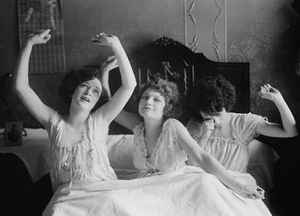 Brox Sisters Source: Wikimedia Commons |
The Brox Sisters
were a female harmony trio consisting of Bobbe (b 1902), Lorayne (b 1901)
and Patricia Brock (b 1904), "Brox" their stage name. Though each was born
in the United States they were raised in Edmonton, Canada. They began
entertaining on the Vaudeville circuit in the 1910s, moving to Broadway
productions in the early twenties, film in the latter upon moving to Los
Angeles. The Brox Sisters issued their first discs in 1922 for Brunswick:
'Away Down South', 'Kicky-Koo', 'School House Blues' and 'Some Sunny Day'. While recording for Brunswick the
Sisters also released vinyl with Victor, beginning in 1924 on that label
with 'Lazy' and 'Cover Me Up'. DAHR has them with the Paul Whiteman
Orchestra in 1930 on 'A Bench in the Park'. Wikipedia has them making a
reunion radio broadcast in 1939, though Honking Duck has them recording
even later in the fifties, issuing ten tracks on Bell with Bruce Adams.
The Sisters are since deceased, Patricia in '88, Lorayne in '93 and Bobbe
in '99. Brox Sisters 1922 Some Sunny Day Brox Sisters 1923 Learn to Do the Strut Brox Sisters 1924 Do I? Red Hot Mama Brox Sisters 1925 Kentucky's Way of Saying Good Morning Who? Brox Sisters 1930 A Bench in the Park With Paul Whiteman Crying for the Carolines Film Hang On to Me/Just You Just Me Film Brox Sisters 1930 Falling in Love Again Film
|
|
|
Born Ida Prather in Toccoa, Georgia in 1896, Ida Cox [1, 2, 3, 4, 5, 6, 7/Disco] began recording blues for Paramount Records in 1923. Born to sharecroppers, Cox left home at age fourteen to travel with White and Clark's Black & Tan Minstrels. In addition to singing she also performed comedy. Her name was changed to Cox upon marrying Adler Cox in 1916, who would shortly afterward be killed during World War I. It was 1920 when she began working with Jelly Roll Morton at the 81 Theatre in Atlanta. Since Bessie Smith was already "Queen of the Blues" Cox was billed as the "Uncrowned Queen of the Blues" when she began recording for Paramount in 1923. In 1929 she and her husband, Jesse Crump, put together a tent show called 'Raisin' Cain' which enjoyed great popularity for a decade, during which time she was billed as the "Sepia Mae West". In 1945 Cox suffered a stroke during a show which forced her into retirement. Retreating to a quiet life in Knoxville, Tennessee, she did, however, make one last record release in 1961, an album titled 'Blues For Rampart Street'. Cox died in 1967 in Knoxville, Tennessee. Partial lists of Cox' recordings with production and songwriting credits at allmusic, australiancharts, 45worlds, 45cat, discogs and redhotjazz. Earlier blues recordings by Cox at Birth of the Blues 2. Ida Cox 1939 Composition: Ida Cox Ida Cox 1940 Composition: Brown/Ida Cox/Glascoe
|
Ida Cox
|
|
|
Gene Austin Source: Gene Austin |
Among the earliest of crooners was Gene Austin. Born in 1900 in Gainesville, Texas, Austin ran away from home to Houston at age fifteen, where he was hired as a vaudeville singer. At age seventeen he joined the Army, serving both for General Pershing in his unsuccessful hunt after Pancho Villa and in Europe during World War I. In 1919 Austin began singing in Baltimore taverns. His first issued recording, 'A Thousand Miles From Here', was n April of 1924 for Vocalion in NYC, he at piano as well. Among compositions to which Austin contributed was 'When My Sugar Walks Down the Street', recorded in January of 1925 with Aileen Stanley in NYC. Austin was greatly popular on radio before his first film appearances, thought to have occurred in 1934. He died in 1972 in Palm Springs, California. Gene Austin 1924 Gene Austin 1925 Sweet Child I'm Wild About You When My Sugar Walks Down the Street With Aileen Stanley Gene Austin 1926 Gene Austin 1927 Gene Austin 1928 Gene Austin 1930 Gene Austin 1931 Gene Austin 1932 Composition: Henry Creamer/Turner Layton
|
|
|
Virginia Liston Source: Past Blues |
Born in 1890 in St. Louis, Missouri,
Virginia Liston's life remains largely unknown. She began performing professionally
about 1912, several years before forming a vaudeville duo with her husband,
Samuel Gray, in 1920. That duo was called Liston and Liston, with which Liston
released her first issues from a session on September 18, 1923 in NYC for Okeh: 'Bed Time Blues' and 'You Thought I Was Blind'. Those were with pianist,
Clarence Williams. Liston's was a
very brief career, her last recordings in 1926, three years before her retirement
from the music industry. She died in June of 1932 in St. Louis, causes unknown. Virgina Liston 1923 Liston's 1st issue Liston's 2nd issue Virgina Liston 1925 I Ain't Gonna Play No Second Fiddle I Ain't Got Nobody, Nobody Cares For Me I'm Sick of Fattening Frogs for Snakes Virgina Liston 1926 I'm Gonna Get Me A Man That's All
|
|
|
Red McKenzie Photo: William P. Gottlieb
Source: Wikipedia |
Born in 1899 in St. Louis,
Missouri, vocalist Red McKenzie also played the comb (with paper,
preferably newspaper, a couple examples below: 'From Monday On' and 'Dark
Town Strutter's Ball') and kazoo. He first recorded in 1924 in Chicago
with Gene Rodemich (unfound) as part of a trio consisting of Jack Bland
(banjo) and Dick Slevin (kazoo). That trio soon became the Mound City Blue
Blowers, their first two releases 'Arkansas Blues' and 'Blue Blues' in
1924 on Brunswick. McKenzie became frontman for
Eddie Condon's Chicagoans
in 1928. He didn't begin singing until 1931, pairing up with
Condon again
from 1944 to '47. Liking his alcohol beyond good measure, McKenzie died of
liver cirrhosis in 1948 in New York City. Red McKenzie 1924 Red McKenzie 1928 Comb Red McKenzie 1929 Film With the Mound City Blue Blowers Film With the Mound City Blue Blowers & Ethel Parkins Film With the Mound City Blue Blowers Red McKenzie 1931 Comb With the Celestial Beings Red McKenzie 1932 With Paul Whiteman With Paul Whiteman Red McKenzie 1936 I Can Pull a Rabbit Out of My Hat With the Rhythm Kings
|
|
| Born in 1900 in Macon, Georgia,
Emmett Miller was a blackface minstrel show performer
before first recording, for Okeh Records, in 1924. Tom Lord's discography
lists him recording 'Anytime' on October 25 and 'The Pickaninnies'
Paradise' on November 7. (Miller recorded another issued version of
'Anytime' in August of 1928 as well, that with 'St. Louis Blues'. A third
version was recorded in September of 1936.) Miller next recorded for Okeh
in Ashville, North Carolina, in September, 1925: 'You're Just the Girl for
Me', 'Big Bad Bill Is Sweet William Now', 'Lovesick Blues' and '(Until I
Left Chicago) I Never Had the Blues'. His backup band, the Georgia
Crackers, would be with Miller on his next tracks in June, 1928, in NYC:
'God's River Blues', 'I Ain't Got Nobody', 'Lovesick Blues' and 'Lion
Tamer'. More titles in NYC followed into 1929. Miller's Georgia Crackers had at times employed Jimmy
Dorsey, Tommy Dorsey,
Gene Krupa and
Eddie Lang. His complete
discography is thought to consist of only 39 singles, his last in 1936. He
died back in his birthplace, Macon, in 1962. Emmett Miller 1924 Emmett Miller 1925 Emmett Miller 1928 Emmett Miller 1929 Big Bad Bill is Sweet William Now Emmett Miller 1936
|
Emmett Miller Source: Flickriver |
|
|
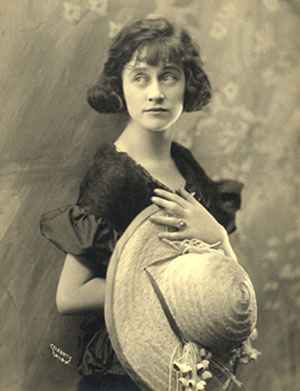
Born Lena Corinne Taylor in 1897, guitarist Lee Morse got her professional start in West Coast vaudeville at age twenty-three. Four years later she would release her first recordings with her band, the Blue Grass Boys, for Pathé Records. In 1935 she opened her own club in Texas, then headed for Rochester, New York, when it burned down in 1939. Married thrice, Morse died unexpectedly in 1954. Lee Morse 1924 Lee Morse 1925 Lee Morse 1926 Lee Morse 1927 I've Looked All Over (For a Boy Like You) What Do I Care What Somebody Said Lee Morse 1930 Lee Morse 1931 Lee Morse 1932
|
Lee Morse Source: Planet Barberella |
|
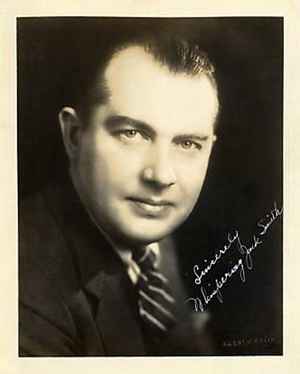
| Born in Bronx in 1898,
Whispering Jack Smith began his career
in 1915 singing in a quartet in a theater in the Bronx. He served the cause
during World War I, after which he plugged music for the Irving Berlin Music
Publishing Company shortly before obtaining employment as a pianist at a radio
station. When a scheduled singer didn't arrive Smith filled his spot, and
was soon releasing his first recordings, for Victor (1925). Smith made his
way to England in 1927, performed in Germany the next year, then landed in
Hollywood in 1930. He died in 1950 in New York City of heart attack. It is
said that Smith's soft style was the result of poison gas during the War,
preventing Smith from singing at greater throttle. But it's contested that
Smith could well belt out a tune, thus that his intimate speaking approach
was a matter of chosen technique. Whispering Jack Smith 1925 I Care For Her and She Cares For Me Some Other Bird Whistled a Tune Whispering Jack Smith 1926 Gimme a Little Kiss, Will Ya, Huh? Poor Papa (He's Got Nothin' At All) When the Red, Red Robin Comes Bob, Bob, Bobbin' Whispering Jack Smith 1927 I've Never Seen a Straight Banana Whispering Jack Smith 1928 Whispering Jack Smith 1930 Whispering Jack Smith 1931 Whispering Jack Smith 1940
|
Whispering Jack Smith Source: Jazz Age Music |
|
|
Josephine Baker Source: Waldina |
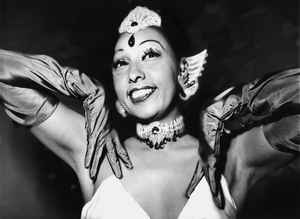
Born Freda Josephine McDonald in St. Louis in 1906, dancer Josephine Baker began her career at age fifteen, dancing on street corners. That led to vaudeville, then Broadway revues, then blackface comedy until an opportunity to travel to Paris arrived in 1925 to perform in La Revue Nègre. Her main claim to fame being an erotic dancer, oft performing nigh naked, she is thought to begun her recording career in Paris in October of 1926, performing as L'Étoile Noire des Folies Bergères, a cabaret where she danced. Those titles for Odeon were 'Who?', 'That Certain Feeling', 'Dinah', 'Sleepy Time Gal', 'I Wonder Where My Baby Is Tonight', 'Bam Bam Bamy Shore' and 'I Want You to Yodel'. Among titles issued from sessions the next month were two on which she performed ukulele: 'You are the only One for Me' and 'Feeling Kind of Blue'. Baker's first appearance in films was in 1927: 'Siren of the Tropics'. (She wasn't a Hollywood star, her films made in France.) Her first return to America in 1935, for the Ziegfeld Follies, was unsuccessful. Returning to Paris in 1937, Baker married and became a French citizen. During World War II she gathered information for French intelligence, she having access as a popular entertainer to high brass at cafés and embassies where she performed. Able to move about France and internationally without suspicion, some of her confidences would be delivered to England in invisible ink on sheet music. Others Baker would pin beneath her underwear, she able, as a celebrity, to elude strip searches. Later during the war she entertained troops in North Africa, as well as King Farouk in Cairo, Egypt. In 1951 Baker's second tour to America was considerably more popular than her first, until an argument with newspaper columnist, Walter Winchell, by twists and turns found her work visa revoked, her engagements cancelled and she back in France. Though based in Paris, Baker was energetic in the civil rights movement in America. She had been denied reservations at 36 hotels, for being black, upon her second visit to the States in 1951, to which her response was refusing to perform at segregated nightclubs. The NAACP awarded her with lifetime membership that year. In 1966 Baker performed for Castro in Havana, then in 1968 she toured Yugoslavia. Finally, in 1973 she opened to a standing ovation at Carnegie Hall, where she sang a rendition of Bob Dylan's 'The Times They Are a Changing', to another standing ovation. Baker died two years later in France of cerebral hemorrhage. Her closest friend in the American entertainment industry had been actress, Grace Kelly. Josephine Baker 1926 Josephine Baker 1927 Josephine Baker 1929 Josephine Baker 1968 Film: 'Hello Dolly' Josephine Baker 1973 The Times They Are a Changing
|
|
|
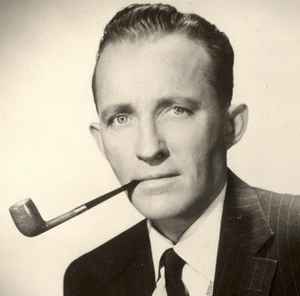
Born in Tacoma, Washington, in 1903, singer Bing Crosby was older brother by ten years to vocalist and bandleader, Bob Crosby. Before Crosby vocalists like Al Jolson had to be "belters" to be heard above other instruments throughout an auditorium, not unalike later "shouters" in rhythm and blues. What placed such as Crosby and Rudy Vallée at the avant-garde of "crooners" was the invention of the microphone. Coming into use in the latter twenties, the microphone permitted one to sing more naturally. Bing had begun his recording career in October 1926 in Los Angeles with Al Rinker and the Don Clark Orchestra, an issue that had been technically botched by a too slow recording speed: 'I've Got the Girl'. Crosby had first performed on radio (KHQ in Spokane) in high school, as a member of the Musicaladers, a school band he had joined in 1923. In 1925 he formed a duo with Al Rinker. Rinker was brother to Mildred Bailey who referred them to Paul Whiteman. The pair's debut performance was at the Tivoli Theatre in Chicago in 1926. Whiteman made the duo a trio called the Rhythm Boys with the addition of Barry Harris. Crosby is thought to have appeared in his first film in 1930: 'The King of Jazz'. Racking up 79 films during his career, using tickets sold as a measure Crosby would appear to be America's third favorite actor, following Clark Gable behind John Wayne. His highest grossing film was 'White Christmas' in 1954, worth thirty million that year. In 1931 Crosby opted for a solo career, his debut radio program, '15 Minutes with Bing Crosby', with CBS. By the end of 1931 ten of his releases had made it to the top fifty for that year. Other radio programs in the early thirties were sponsored by Cremo Cigars and Chesterfield cigarettes. In 1941 Crosby brought Irving Berlin's 'White Christmas' to radio audiences on Christmas Day (recorded, a copy of which belongs to the Crosby estate). Officially recorded October 22, 1942, 'White Christmas' stayed No. 1 on the charts for eleven weeks and remains the best-selling song of all time, having sold over 100,000,000 copies. During World War II Crosby entertained troops in Europe. Upon leaving the radio program, 'Kraft Music Hall', in 1946, Crosby began starring on 'Philco Radio Time' the next year. Up to that time recordings had been made on transcription discs of etched wax. It was Crosby's first show with Philco on which magnetic tape was employed, the difference between that and transcription discs as marked as the later move from vinyl to digital CD. Along with tape recording came the 'laugh track' first used by Crosby and Philco, after which Crosby acquired a significant interest in Ampex founded in 1944. Also important in the forties had been Crosby's partnership with the Andrews Sisters, commencing in latter 1939, issuing 47 songs with them on Decca into the early fifties. In 1950 Crosby produced 'The Fireside Theater' for television. 'The Bing Crosby Show' aired for the first time on 3 Jan of 1954. Crosby would later become head of Bing Crosby Productions, producing such as the 'Ben Casey', then 'Hogan's Heroes', television series in the sixties. Crosby's business interests were television stations, thoroughbred racing and breeding, and part ownership of the Pittsburgh Pirates. His last concert in America was given in August of 1977. His last television appearance was in September that year, on which he sang a couple duets with David Bowie. In October of '77 Crosby gave his final concert, at the Brighton Centre in London. Crosby's favorite sport was golf, at which he was an accomplished contender and often played with Bob Hope. It was on the evening of October 14, 1977, at La Moraleja Golf Course near Madrid that Crosby suffered a heart attack after a game and died, his last words, "That was a great game of golf, fellas." He had been twice married, first to Dixie Lee from 1930 to her death in 1952, later wedding Kathryn Grant in 1957. Of Crosby's seven children, four to Dixie, five of them became entertainers in music, film or television (Gary, Dennis, Phillip, Lindsay and Mary). One grew up to become a banker (Harry) and the youngest a pro golfer (Nathaniel). Beyond music and family Crosby's major loves were golf and horse racing [*]. Per above, he was also a businessman [*]. References: 1, 2, 3, 4, 5, 6, 7, 8; chronologies: 1, 2; film and 1, 2; television and 1, 2; IMDb; magnetic tape and: 1, 2, 3, 4. Discographies: 1, 2, 3, 4, 5. More Bing Crosby under the Andrews Sisters in Swing Song. Bing Crosby 1926 I've Got the Girl With Al Rinker & the Don Clark Orchestra Composition: Walter Donaldson Bing Crosby 1927 Paul Whiteman Orchestra Composition: Buddy De Sylva/Lew Brown/Ray Henderson Paul Whiteman Orchestra Music: Donald Heywood Lyrics: Will Marion Cook Paul Whiteman Orchestra Composition: Ray Henderson Mary (What Are You Waiting For) Paul Whiteman Orchestra Composition: Walter Donaldson Paul Whiteman Orchestra Composition: Walter Donaldson Paul Whiteman Orchestra Music: Walter Donaldson Lyrics: George Whiting Paul Whiteman Orchestra Composition: Walter Donaldson Peter DeRose/Harry Richman/Jo Trent Side By Side Paul Whiteman Orchestra Composition: Harry Woods Bing Crosby 1928 Paul Whiteman Orchestra Music: Walter Donaldson Lyrics: Gus Kahn Bing Crosby 1929 Violin: Matty Malneck Composition: Peter DeRose/Mitchell Parish Bing Crosby 1931 Music: Jay Gorney Lyrics: Yip Harburg From 'Schöner Gigolo, armer Gigolo': Music: Leonello Casucci 1928 Lyrics German: Julius Brammer 1924 Lyrics English: Irving Caesar 1929 Bing Crosby 1932 Lawd, You Made the Night Too Long Don Redman Orchestra & the Boswell Sisters Composition: Victor Young/Sam Lewis Anson Weeks Orchestra Composition: Leo Robin/Ralph Rainger Anson Weeks Orchestra Music: Victor Young Lyrics: Crosby/Ned Washington Bing Crosby 1935 Singing Moonburn Piano: Joe Sullivan Composition: Hoagy Carmichael/Edward Heyman Bing Crosby 1936 Film Composition: Johnny Mercer Bing Crosby 1942 Composition: Irving Berlin Bing Crosby 1944 Music: Cole Porter Lyrics: Robert Fletcher/Cole Porter Composition: Leroy Anderson Bing Crosby 1962 Composition: Felix Bernard/Richard Smith Bing Crosby 1963 Television duet with Caterina Valente
|
Bing Crosby Source: Pipes Magazine |
|
|
Ruth Etting Source: Rankopedia |
Born in David City, Nebraska, in 1896, singer
Ruth Etting made her first recording in 1924 for
Victor (unissued). She next gained a contract with Columbia Records in 1926.
Etting could well be listed under
Hollywood (lower on this page) but hers was a major radio and recording
career. She also appeared in several Broadway productions. Etting had originally
been an artist. It was while designing costumes for a show at Marigold Gardens
in Chicago that she began singing and dancing there as a chorus girl. She
soon became a featured vocalist and began performing for radio. After her
initial recording sessions with Columbia she appeared in the 1927 edition
of the Ziegfeld Follies, and again in 1931. In 1938 her pianist, Myrl Alderman,
was shot by her estranged husband, Moe Snyder, starting something of a gunfight
between Snyder, Etting and their daughter, Edith (Snyder's by previous marriage),
attempting to protect Etting. Alderman and Etting married in Las Vegas in
December that year during Snyder's trial. Her daughter, Edith, died the next
year, only age 22, of heart disease. Alderman died in 1966, and Etting herself
in 1978 in Colorado Springs. Ruth Etting 1926 Ruth Etting 1927 Ruth Etting 1928 My Blackbirds Are Bluebirds Now Ruth Etting 1929 I'll Get By (As Long As I Have You) Ruth Etting 1930 Ruth Etting 1931 Ruth Etting 1936
|
|
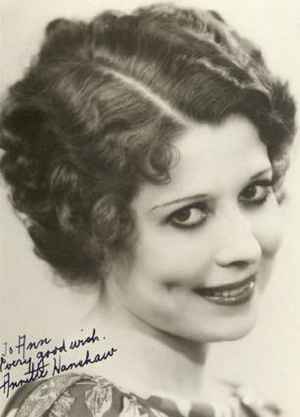
| Born in New York in 1901 the earliest recording
found for Annette Hanshaw is her real first
recording, an audition medley for Pathé Records in 1926 in NYC, unissued. Hanshaw used a number
of pseudonyms during her career, including Gay Ellis, Dot Dare, Patsy Young,
Marion Lee, Janet Shaw, and Lelia Sandford. She starred on the 'Maxwell House
Show Boat' radio show for a couple years starting in 1932, then appeared in
her only film, 'Captain Henry's Radio Show' the next year. Hanshaw made her
last recording in 1934 for Vocalion, before retiring from the music industry.
She died of cancer in 1985 in Manhattan. Annette Hanshaw 1926 I'm All Alone In A Palace Of Stone Kiss Your Little Baby Goodnight Unissued test for Pathe Records Annette Hanshaw 1927 Who's That Knocking At My Door Annette Hanshaw 1928 As Patsy Young My Blackbirds Are My Bluebirds Now Annette Hanshaw 1929 Daddy Won't You Please Come Home As Patsy Young I've Got A Feeling I'm Falling Guitar: Eddie Lang Also released as Gay Ellis You Wouldn't Fool Me Would You? As Dot Dare Annette Hanshaw 1930 I Can't Give You Anything But Love As Patsy Young Annette Hanshaw 1932
|
Annette Hanshaw Photo: Murray Kent Collection Source: Archive Org |
|
| Though Frank Luther
[1,
2]
(aka Bud Billings:
1,
2) was a pianist he was better known as a tenor vocalist. Born Frank Luther Crow
on a Kansas farm near Lakin in 1899 (some sources 1900 or 1905), he began his professional career
at age 16 as a tenor in a traveling quartet called the Meistersingers. In
1926 he joined a group called the DeReszke
Singers, changing his name from Crow to Luther and touring with Will Rogers. Praguefrank's has
Luther recording with
Carson Robison as early as
June 26 of 1926: 'The Hills of Kentucky' (unissued) and 'The Little Green
Valley'/'Drifting Down the Trail of Dreams' (Melotone M12179, Polly P9062).
Early 1927 found Luther with Sam Lanin and his Famous Players, 'Wherever
You Go' gone down on March 30 for issue the next year. Luther also joined
the
Revelers for a time in 1927 to tour to Great Britain, not known on what
recordings he may have sang. September 30, 1927, found him with Cass Hagan
for Columbia: 'Manhattan Mary', issue unknown. Early 1928 found Luther
with
Sam Lanin and his Famous Players, such as 'Wherever You Go'
gone down ion March 13. On July 13 of 1928 he sang on 'Blue Grass' for
Vincent Lopez
and His Casa Lopez Orchestra. July 28 saw 'Ten Little Miles from Town'
with Ben Bernie and his Hotel Roosevelt Orchestra. Those
had followed Luther's
first tracks on June 8 of 1928 as a country
singer in partnership with Carson Robison:
'Steamboat (Keep Rockin')' and 'There's a Whippoorwill a Calling', neither
issued. Tony Russell's 'Country Music Records' (CMR) has Luther's next session circa June 15-16 "probably" accompanied by Murray Kellner on fiddle and
Robison (harmonica/guitar) on 'The West Plains
Explosion'/'The Hanging of Charles Birger' (Matrices: GEX 1439, GEX 1440;
Issued Gennett 6530).
Robison had recorded the same two songs with
Vernon Dalhart
earlier on April 26 for issue in July '28 on Domino 0241.
Luther's next
session on the 18th of August resulted in 'The Little Green Valley' (Edison
5572) and 'Six Feet of Earth' (Edison 5564).
Luther was accompanied by
unknowns on those,
Robison listed in CMR as "probably" on 'The Little Green
Valley'.
Luther and
Robison partnered to 1932, also performing as Bud & Joe Billings,
the Black Brothers, the Jones Brothers, et al. They stretched along 'I Tore
Up Your Picture When You Said Goodbye' as the Black Brothers on August 3,
1928, on Okeh 45253. Also recording under numerous aliases, Luther laid
out 'Hallelujah! I'm a Bum'/'The Bum Song' (Okeh 41092) as Pete Wiggins on
August 6 of '28. Praguefrank's gives up the Luther/Robison partnership on April 4
of 1932 for several tracks in NYC, three unissued. The
other two were released with Luther as
Bud Billings: 'When the Sun Goes Down
in a Little Prairie Town'/'Ma and Pa' (Victor 22997) [DAHR. Rocky52]. During
his country collaborations with Robison,
Luther also recorded with the jazz dance band, the
High Hatters,
from 1929 into 1931. After his four
year partnership with Robison Luther formed the
Luther Trio, a country outfit with baritone Leonard Stokes and the
latter's wife, Zora Layman. Albeit Luther
was an important figure in early country western he was more famous for his
recordings for children, commencing in 1933 (one example below, 'The
Gingerbread Boy' from 1948).
In 1936 he starred in 'High Hat', his only feature-length film. Having begun
an Americana series for Decca in the latter thirties, Luther published 'Americans
and Their Songs' in 1942 as something of a companion to albums featuring songs
of the Civil War, early New York, old California, the Gay Nineties, Irish
favorites and rare Christmas carols. He also issued a couple albums of Stephen
Foster (1826-64) compositions. Luther composed and recorded actively up to
the time of his death in New York City on November 16, 1980. Discogs lists
his last album of certain issue date as 'Winnie The Pooh and Christopher
Robin' in 1977. Luther had written titles like 'Your Lover' ('34), 'You're
the Only One' ('35), 'Your Dear Eyes' ('35), 'Your Loveliness and My
Devotion' ('35) and 'Punch and Judy' ('45). Discos w various credits at
1,
2,
3. Luther in
visual media. Other
biographical profiles:
1,
2. More
Luther and
Robison in
C&W. Frank Luther 1928 With Carson Robison Composition: Carson Robison With Vincent Lopez & His Casa Lopez Orchestra With Ben Bernie & His Hotel Roosevelt Orchestra With Sam Lanin and His Famous Players Frank Luther 1929 With the Phil Ohman Orchestra Music: Kay Swift Lyrics: James Paul Warburg With the High Hatters Music: Louis Alter Lyrics: Joseph Trent With the Phil Ohman Orchestra With the High Hatters Frank Luther 1930 With the Elliot Jacoby Orchestra Composition: Elliott Jacoby/Merwin With the High Hatters Composition: Jerome Kern/P.G. Wodehouse With Leo Reisman & His Casino Royal Orchestra Composition: Cole Porter Frank Luther 1948
|
Frank Luther Source: Hillybilly Hearthrobs
|
|
|
Helen Morgan |
Born in 1900 in Danville, Illinois,
Helen Morgan began her career as a hard drinking
torch singer in Chicago speakeasies at about age twenty (1920), her style
to lounge atop the piano while getting sauced. Her first recordings were renditions
of songs taken from Gershwin's
Broadway musical of the previous year, 'Oh, Kay!', in 1927, the same year
she debuted in her first Broadway musical, 'Showboat'. By that time she had
become so popular an entertainer that speakeasies were being named after her:
The House of Morgan, Chez Helen Morgan, Helen Morgan's Summer House and Helen
Morgan's 54th Street Club. That same year (1927) Morgan was arrested at the
Chez Morgan for liquor law violations. The club, shut down, reopened as Helen
Morgan's Summer House, after which she was arrested the following year a second
time and stopped performing in speakeasies. (Both violations arrived to acquittals.)
In 1929 Morgan began appearing in films: 'Applause' and 'Showboat'. (She also
starred in the 1936 version of 'Showboat'.) In 1931 she appeared in the Ziegfeld
Follies. Morgan died in 1941, of liver cirrhosis (heavy alcohol consumption
over the years), collapsing on stage during a performance in Chicago. Helen Morgan 1927 From the Broadway musical 'Oh, Kay!' From the Broadway musical 'Oh, Kay!' Helen Morgan 1929 What Wouldn't I do For that Man Helen Morgan 1930 Film with Jimmy Durante Helen Morgan 1936 From the film 'Showboat'
|
|
|
Gracie Fields Source: Echo Stains |
Gracie Fields,
born (1898) in Lancashire, England, was an actress and popular vocalist who
did much by way of presenting jazz to the general public in Great Britain.
She first recorded in 1928 (age 30) for HMV ('Because I Love You' and 'My
Blue Heaven'). Fields began performing on stage in 1905. Her first professional
appearance occurred five years later at the Rochdale Hippodrome in Lancashire.
Thrust was added to her early career in 1923 upon marrying comedienne and
impresario Archie Pitt, the pair beginning to do touring revues together.
Fields' first film was 'Sally In Our Alley' in 1931. In 1933 she established
the Gracie Fields Children's Home and Orphanage. After her divorce from Pitt
in 1939 she donated the house in which they had lived (with Pitt's mistress)
to a maternity hospital. In 1940 she and new husband, Italian film director
Monty Banks, moved to Santa Monica, California, to avoid his getting inducted
into the military. During World War II Fields entertained Allied troops. Returning
to Great Britain after the war, Fields had her own BBC radio show in 1947:
'Our Gracie's Working Party'. She began singing at the London Palladium the
next year. Upon the death of her husband, Banks, in 1950, Fields married a
Romanian radio repairman, Boris Alperovic, two weeks later, then somewhat
afterward established La Canzone Del Mare, a bathing and restaurant complex
for the very rich on the Isle of Capri. In 1978 she opened the Gracie Fields
Theatre in Lancashire. In January 1979 Fields made her last television appearance
on 'The Merv Griffin Show', the same year she was made Dame Commander of the
Order of the British Empire. She died in September that year of pneumonia.
Scattered amidst the jazz below is some of Field's greater repertoire as a
popular singer. Gracie Fields 1928 Gracie Fields 1929 Gracie Fields 1933 Gracie Fields 1934 Gracie Fields 1936 Gracie Fields 1937 Gracie Fields 1938 Composition: George Gershwin Gracie Fields 1939 With Tommy Fields Gracie Fields 1940 Little Curly Hair In A High Chair Gracie Fields 1943 Gracie Fields 1945 I'll Get By(As Long As I Have You) Gracie Fields 1947 Gracie Fields 1948 Gracie Fields 1951 Gracie Fields 1961
|
|
| Born in Englewood, New Jersey in 1904,
Elisabeth Welch began her professional career
in New York City in 1922 at age 18. She was a theater singer until she first
recorded in 1928 with Irving Mill's
Hotsy Totsy Gang ('Digga Digga Do' and 'Doin' The New Lowdown'). She also
married musician, Luke Smith, in 1928. He would die in 1936 and Welch would
remain single, no children, the rest of her life. In 1929 she moved to Europe,
beginning a life of traveling back and forth between Paris, New York City
and London, the latter her preferred domicile. From 1934 to 1936 she had her
own radio program, 'Soft Lights and Sweet Music', with the BBC. Her first
television appearance was in 1936, for BBC as well. Welch remained in London
during the Blitz and entertained troops. After the war she worked largely
in theatre, radio and television. In 1980 she began to perform on Broadway
again. Welch's last performance was for the television documentary, 'Black
Divas', in 1996. She died in London July 15, 2003. Elisabeth Welch 1928 Elisabeth Welch 1934 Elisabeth Welch 1935 Elisabeth Welch 1936 Film: 'Soft Lights and Sweet Music' Elisabeth Welch 1944 Elisabeth Welch 1979
|
Elisabeth Welch Source: Music Timeline |
|
| Many great musicians don't make this condensed
history because there isn't enough to be found of them at YouTube. Most tracks
by the Three X Sisters below are in such poor
condition that it's nigh pointless to listen. But who have the software may
be able to improve their sound. At first called the Hamilton Sisters and Fordyce,
the Three X Sisters consisted of Jessie Fordyce, Violet Hamilton and Pearl
Santos (Hamilton prior to marriage). They officially formed the trio in 1924
upon successfully performing with each other in 1923. All three were well-known
theater performers for several years before forming a trio. They played vaudeville
at first, but by 1927 they were popular enough for a European tour. They changed
their name to the Three X Sisters in 1932 upon starting their radio career
with CBS, the year they also first recorded ('The Clouds Roll By' with Eddie
Duchan among their first sessions.) Though the Sisters focused on radio, they
played the 1936 edition of the Ziegfeld Follies. They are thought to have
last performed as a trio in 1941 with NBC. Three X Sisters 1932 With Eddy Duchin as the Hamilton Sisters and Fordyce Three X Sisters 1933 Three X Sisters 1937 With Bing Crosby Three X Sisters 1940
|
Three X Sisters Source: Wikipedia
|
|
|
Hollywood wasn't near the jazz hub that were New Orleans, Chicago and New York City. Yet, though jazz often got watered down in Hollywood to serve the more expansive purposes of entertainment via film, the influence of Hollywood on the American population, concerning nigh everything, includes early jazz.
|
||
|
Al Jolson Source: Broadway World |
Born Asa Yoelson in 1886 in (now) Lithuania, Al Jolson, an early burlesque, vaudeville, Broadway and Hollywood performer first recorded in 1911. Though Jolson wasn't strictly a jazz singer, something borderline to that notion, he was the star of the film 'The Jazz Singer' released in 1927, marking the transition of silent films to talkies. (Liza Minnelli was another popular singer one could append to the jazz genre on the strength of one film alone, that 'Cabaret' in 1972.) Some credit Jolson with opening the path amidst the American zeitgeist to black musicians, who were the prevalent force in not only blues and jazz, but rock & roll as well per rhythm & blues. Jolson had been brought to Washington DC in 1894 with his family, his mother dying the next year, after which he and his brother, Hirsch, began busking the streets. In 1902 he began singing with the Walter L. Main Circus. In 1903 Jolson began doing burlesque, then formed a trio with Joe Palmer and his brother, Hirsch. Blackface followed in 1904 at Keeney's Theatre in Brooklyn. Unlike some performers, Jolson loved doing blackface. Not so ironically, Jolson was also an energetic defender of black performers and rights. (In the early twenties the Ku Klux Klan would at its height, consisting of about fifteen percent of the voting populace.) Jolson's first Broadway appearance was 'La Belle Paree' at the Winter Garden Theatre in 1911. He starred in his first talkie, 'The Plantation Act', in 1926, then the first feature-length talkie, 'The Jazz Singer' (Warner Bros.), in 1927. Jolson's first radio appearance was the following year (1928) on the 'Dodge Victory Hour'. In 1936 he starred in 'The Singing Kid' with Cab Calloway, insisting Calloway receive the same star treatment as himself. Columbia Pictures released the biopic, 'The Jolson Story', in 1942. As for television, Jolson called it "smell-evision" and never performed in that medium. He was, however, the first to perform for the USO (United Service Organizations, founded 1941) during World War II. While in the Pacific Jolson came down with malaria and had to have a lung removed. When he was told by the Secretary of Defense that there were no funds to send him to Korea during that conflict he paid for it himself. Less than a month after his return to the States he died of heart attack in San Francisco, October 23, 1950. Al Jolson 1911 Al Jolson 1920 Al Jolson 1922 Al Jolson 1927 From the film 'The Jazz Singer' Al Jolson 1929 Al Jolson 1947
|
|
|
Born Isidore Itskowitz in New York City in 1898, like Al Jolson, vaudeville entertainer and vocalist Eddie Cantor wasn't a jazz singer entire. Cantor began appearing on stage as a teenager. Among his first jobs was singing for tips as a waiter in Coney Island with Jimmy Durante at piano. He first appeared in vaudeville in 1907 at the Clinton Music Hall. In 1912 Cantor was doing blackface. He then formed a team with Al Lee that gained him a spot in the Ziegfeld Follies post-show, 'Midnight Frolic', in 1917. Cantor then joined the Ziegfeld Follies, with which succeeding editions he performed for the next decade. Cantor is known to have sang for radio as early as 1922, a medium in which he would work for more than three decades. He is thought to have appeared in his first film, his other major medium, in 1923, a Phonofilm short titled, 'A Few Moments With Eddie Cantor'. In 1938 Cantor created the March of Dimes campaign for the National Foundation for Infantile Paralysis via his own radio program. He and other entertainers encouraged audiences to send President Franklin Roosevelt, a polio victim, a dime, resulting in 2,600,000 dimes received in Washington. Cantor's last film was in 1948: 'If You Knew Susie'. He may be best known on television as one of the hosts for the 'Colgate Comedy Hour' from 1950 to 1954. Cantor published a minimum of eight books during his career, starting with 'Caught Short!' in 1929. He passed away in 1964 in Beverly Hills. Eddie Cantor 1917 That's the Kind of a Baby for Me Eddie Cantor 1920 Eddie Cantor 1925 If You Knew Susie Like I Know Susie Eddie Cantor 1929 Eddie Cantor 1930 Film: 'Whoopee!' (colorized) Eddie Cantor 1932
|
Eddie Cantor Source: Travalanche
|
|
|
Rudy Vallée Source: Song Facts |
Born in 1902 in Island Pond, Vermont, though Rudy Vallée was a bandleader and sax player he was more famous as among the first jazz crooners. His first two songs ('A Dream' and 'Nola'), recorded in 1921, are unfound for this history. Vallée began adulthood by getting discharged from the Navy for being too young at fifteen years of age for military service. He returned to high school and played both clarinet and sax with various bands in New England, until ending up in London in 1924 to play with the Savoy Havana Band at the Savoy Hotel. Returning to the States a year or so later, Vallée acquired a degree in philosophy from Yale in 1927. Upon graduation he formed a band called the Connecticut Yankees. It was with that band that he started singing, began recording continuously, then got his start in radio the next year in 1928. The venues in which Vallée sang were often not equipped with microphones. As his was a soft style and voice that didn't carry he often sang through a megaphone. (Early sound transmitters had been invented for telephone in the previous century. Johann Philipp Reis had worked on his invention in Germany from 1854 to 1862. Then Alexander Graham Bell patented his telephone in 1876. The first patent for the microphone proper was awarded to Thomas Edison [1, 2, 3, 4, 5] in 1877 for the carbon microphone, though David Edward Hughes is said to have invented it first in England as well as coined the term "microphone". The carbon microphone was the one used during the very first radio broadcast in 1910 [a performance at the New York Metropolitan Opera House]. Electromagnetic microphones were introduced in 1923 by Captain H. J. Round and Harry F. Olson, working independently.) Vallée began hosting the 'Fleischmann's Yeast Hour' radio program in 1929, also starring in his first feature film that year: 'The Vagabond Lover'. He appeared on Broadway from 1961 to 1964 in the musical, 'How to Succeed in Business Without Really Trying', which was also his last feature film in 1967. Vallée also recorded his last album, 'Hi Ho Everybody', in 1967. He died of cancer in 1986 in Hollywood. Rudy Vallée 1927 Rudy Vallée 1929 Rudy Vallée 1930 Rudy Vallée 1931 Life Is Just a Bowl Of Cherries Rudy Vallée 1932 Let's Put Out the Lights and Go To Bed Rudy Vallée 1933 Did You Ever See A Dream Walking?
|
|
| Born Ruggiero Eugenio di Rodolpho Colombo
in 1908 in Camden, New Jersey, actor and vocalist Russ
Columbo played violin professionally at age thirteen. He quit high school
at age seventeen to tour with bands and perform in nightclubs. His first recordings
were made for Okeh Records in 1928 with the
Gus Arnheim Orchestra. Columbo
also first appeared on film in 1928 with Gus Arnheim, a short Vitaphone. He
then ran a nightclub, the Club Pyramid, before securing a spot on radio in
NYC with NBC. Columbo's last recordings were made in August of 1934, as on
September 2nd he was accidentally shot in the head in Los Angeles by a friend,
portrait photographer Lansing Brown, who was fiddling with a loaded antique
pistol that Brown used as a desk ornament. Russ Columbo 1928 With Lupe Vélez Russ Columbo 1931 Where the Blue Of fhe Night Meets the Gold Russ Columbo 1932 Russ Columbo 1933 More Than You Know/Time On My Hands Film You Are My Past, Present and Future Film: 'Broadway Through a Keyhole' With Constance Cummings Film: 'Broadway Through a Keyhole' With Constance Cummings Russ Columbo 1934
|
Russ Columbo Source: Live Journal |
|
|
Born in Schöneberg, Germany, sultry actress Marlene Dietrich began her career about age twenty-one, singing as a chorus girl in Berlin theatres. She would not only play roles in an impressive number of films, but she was a prolific recording artist as well. 'Wenn die Beste Freundin', below, is the first single she released in 1928, five years after her first film, 'Tragedy Of Love'. Like other musicians in this section, Hollywood would bring Dietrich into contact with jazz while at once limiting its singular pursuit. During World War II Dietrich sold more war bonds than any other entertainer, also performing for troops with the USO. After the war Dietrich began to concentrate on nightclub acts for the next couple decades. Dietrich was something famous for her appetite: said to be among her love affairs through the years were Gary Cooper, James Stewart, Erich Maria Remarque, Jean Gabin, Mercedes de Acosta, Yul Brynner, George Bernard Shaw, John F. Kennedy and John Wayne. Dietrich died of renal failure in 1992 in Paris. Marlene Dietrich 1928 Marlene Dietrich 1930 Film: 'The Blue Angel' Marlene Dietrich 1939 Marlene Dietrich 1948 From the film 'A Foreign Affair' Marlene Dietrich 1963 Where Have All the Flowers Gone Live performance Marlene Dietrich 1965 Where Have All the Flowers Gone
|
Marlene Dietrich Source: TVR
|
|
|
Johnny Mercer Photo: William L. Gottlieb Source: WBUR
|
Born in Savannah, Georgia, in 1909,
songwriter
and vocalist Johnny Mercer,
had an attorney and real estate developer for a father whose secretary was
his mother. Mercer bought records by such as
Bessie Smith and
Louis Armstrong as a
teenager. He headed for New York City to become an actor upon graduating from high
school, vaudeville on its way out about that time as composers who'd been
making a fortune via such as Tin Pan Alley now dominated NYC's musical
zeitgeist, songwriters such as Irving Berlin [1,
2,
3,
4,
5,
6,
7,
8,
9,
10],
Cole Porter [1,
2,
3,
4,
5,
6] and
George Gershwin. IBDB has
Mercer performing in the Broadway play, 'Hero Worship', as
early as 11 May 1928. He bummed about as an actor until receiving his big break
in 1932 upon winning a singing contest staged by bandleader
Paul Whiteman, thus joining
his orchestra. Lord's begins its sessionography of Mercer with
Frank Trumbauer's orchestra
on 5 April 1932 in NYC for 'Dinah' and 'My Honey's Lovin' Arms' (Columbia
18002). He formed a songwriting partnership with
Hoagy Carmichael during
that early period as well. Along with
Bing Crosby,
Carmichael would be one
of Mercer's most important musical associations. In 1935 Mercer moved to Hollywood
and began composing for films [1,
2]. From that point onward he would become one
of America's favorite lyricists, penning such as 'Jeepers Creepers', 'Blues
in the Night', 'That Old Black Magic', 'One for My Baby', 'Come Rain or Shine',
'Moon River' and 'Days of Wine and Roses'. Between 1946 and 1962 Mercer tallied
four Academy Awards for Best Original Song in collaboration with Harry Warren,
Hoagy Carmichael and
Henry Mancini. Mercer
died on
25 June 1976 in Bel Air, California, of brain tumor. References: 1,
2,
3,
4,
5,
6,
7,
8.
Catalogues: 1,
2,
3,
4. Johnny Mercer 1934 With Paul Whiteman Composition: Johnny Mercer/Bernie Hanighan With Paul Whiteman & Peggy Healy Composition: Matty Malneck/Johnny Mercer Johnny Mercer 1942 Composition: Johnny Mercer Johnny Mercer 1944 Composition: Johnny Mercer Johnny Mercer 1945 On the Atchison, Topeka, and the Santa Fe Music: Harry Warren Lyrics: Johnny Mercer Johnny Mercer 1946 With the Pied Pipers Music: Jimmy Van Heusen Lyrics: Johnny Burke Johnny Mercer 1948 My Happiness With the Pied Pipers Composition: Betty Peterson/Borney Bergantine
|
|
|
Born in Brooklyn in 1893, swing-era actress Mae West began her career at age fourteen doing vaudeville. (Vaudeville was a style of theatre presenting a series of unrelated acts. It was highly popular for about forty years until it died in the thirties.) Her first Broadway performance was in 1911 at age eighteen ('A La Broadway'). Mae early got into trouble with the law when she was charged with corrupting the morals of youth upon the 1918 performance of her first play, 'Sex', which she wrote, produced and directed. Her film debut, 'Night After Night', did not occur until 1932. In 1938 she managed to get banned from NBC radio for what the FCC considered to be "vulgar and indecent" speech. West appeared in her last film, 'Sextette', in 1978. She died in Los Angeles in 1980. Mae West 1933 From the film: 'I'm No Angel' Film: 'I'm No Angel' They Call Me Sister Honky Tonk Film: 'I'm No Angel' Film: 'She Done Him Wrong' Film: 'She Done Him Wrong' I Wonder Where My Easy Rider's Gone Film: 'She Done Him Wrong' Mae West 1940 Film: 'My Little Chickadee'
|
Mae West Source: OTR Cat
|
|
91 Years of 'Toot Toot Tootsie Goodbye'Anthem of the Roaring Twenties Composition: Ted Fiorito & Dan Russo Lyrics: Ernie Erdman & Gus Kahn Bailey's Lucky Seven 1922 Benson Orchestra Of Chicago 1922 Al Jolson 1922 Hoosier Hot Shots 1936 Eddy Howard 1942 Mel Blanc 1949 Art Mooney 1949 Ted Fio Rito & Joy Lane 1950? June Allyson & Van Johnson 1953 Pearl Bailey 1955 Sonny Rollins 1957 Eydie Gormé 1958 Ben Light 1958 Brenda Lee 1959 The Doowackadoodlers 1962 Woody Herman 1966 Alex Welsh Band 1973? The Diamond Dolls 1979 Tuxedo Junction 1979 Jerry Lee Lewis 1980 Tiny Tim 1993 Gregg Isett 2008 Gelber & Manning 2008 Bijou Orchestra 2009 Helen Burns 2009 Rob Bourassa 2011 Bill Edwards 2011 The Vandervates 2011 Short Grain 2012 Alexander's Rag Time Band 2013 Bob Tulip 2013
|
||
|
|
We proceed no further than Midge Williams and Mae West on this page. We will be adding more as such occur. |
|
Early Blues 2: Vocal - Other Instruments
Modern Blues 2: Vocal - Other Instruments
Modern Blues 3: Black Gospel Appendix
Romantic: Composers born 1770 to 1840
Modern: Composers born 1900 to 1950
Early Jazz 1: Ragtime - Bands - Horn
Early Jazz 2: Ragtime - Other Instrumentation
Modern 4: Guitar - Other String
Modern 5: Percussion - Other Orchestration
Modern 7: Latin Jazz - Latin Recording
Total War - Sixties American Rock
Other Musical Genres - Popular Music Appendix
Jazz Early - Ragtime - Swing Jazz
Jazz Modern - Percussion - Song - Other
Boogie Woogie - Doo Wop - R&B - Rock & Roll - Soul - Disco
Sixties American Rock - Popular